


Capture an observation with enough context to understand it later, then add a question that opens possibilities. Return to a small selection rather than cataloging the entire notebook. Choose one fragment, invent several directions, and write a controlled test passage. Keep a reference between the original note and the experiment so you can retrieve both. A useful notebook supplies material for writing; its value does not depend on constant collection.
Useful when you collect many fragments but struggle to retrieve one and turn it into actual prose.A notebook can fill up while your writing remains untouched. You save a striking phrase, an image and a possible title, then close the cover. Months later the notes are either too vague to recover or so carefully categorized that opening them feels like maintaining a second job. Collection has become the activity instead of supporting the activity.
Treat the notebook as a place for noticing and testing, with a regular route back to prose. This guide uses invented sound fragments collected by a fictional writer, Sal. A spoon tapping the side of a cup eventually becomes part of a ferry-terminal scene. The transformation matters more than the object: Sal will separate observation from interpretation, add questions and try the fragment in a different situation.
Choose a capture method you can reach easily
The best capture method is the one available when you notice something and readable when you return. Paper, a plain text file and a notes app can all work. You do not need to synchronize several systems before writing your first useful note. Start with one usual place and a temporary way to capture elsewhere when necessary.
Keep the format forgiving. A date, a rough context and two or three precise details are often enough. If drawing a shape preserves it better than describing it, draw it. If a phrase appears while you are in the middle of another task, write the phrase first and add context later. Do not create a rule that makes a brief interruption require a complete journal entry.
Choose what the notebook is for now. Sal wants material for scenes, so the first purpose is observing action, sound and small social arrangements. Someone writing essays might collect questions and source leads instead. A purpose narrows attention without banning surprises. It also helps you recognize when a more elaborate system would solve a real difficulty rather than simply look satisfying.
Preserve what happened before explaining what it means
A useful observation records enough sensory or behavioral evidence to recover the moment. “Lonely person in café” is mostly an interpretation. “A spoon kept touching the cup after the drink was gone” gives the writer something visible and audible. The person could be lonely, impatient, distracted or waiting for a friend. Keeping the evidence leaves possibilities open.
In this fictional notebook, Sal writes: “Near the side door, four light taps; pause when the door opens; two quicker taps after it closes.” The pattern is more useful than a general adjective such as nervous. It contains a change and a possible relationship between sound and attention. It can later influence a scene without importing the original setting.
Label invented additions. If Sal imagines that the person is waiting for a letter, that belongs under a separate question or fiction note. Otherwise a vivid guess can begin to feel like something actually witnessed. The distinction improves creative freedom: the observation stays clear, and the invented version can change without pretending to describe a stranger’s private life.
Café person tapping. Anxious. Could be in a story.
Invented observation: spoon against an empty cup, four taps, then silence whenever the side door moves. Fiction question: what if a lost-property clerk recognizes that rhythm from someone who insists they have never met?
The revised entry stores a pattern, the trigger that changes it and a separate fictional possibility. It does not decide the person’s inner state from a small gesture. The scene can move far from the imagined café.
Four taps; silence when the door moves.
What changes the tapping?
A clerk recognizes a supposedly unknown visitor.
Capture several kinds of material without cataloging everything
If every note is a beautiful sentence, the notebook may become a collection of surface effects. Mix sensory fragments with practical processes, contradictions, overheard structures and questions. You might record how an umbrella stand changes a queue, how someone avoids answering a simple request or which part of a repair requires two people.
You can use a few small labels when they help: observation, question, invention and source. Avoid making dozens of categories before you have enough material to need them. An entry can belong to more than one category. The point is to find and use it, not decide whether a possible character habit belongs under gesture, psychology or dialogue.
Keep source leads distinct from your own language. If a phrase comes from a book or other material, record where it came from and mark any copied wording clearly. A creative notebook should not blur remembered reading into original sentences. You can investigate the subject later while retaining a reliable account of what you observed, imagined or encountered in someone else’s work.

A notebook entry needs enough context to recover the observation and a separate place for what you invent from it.
Original editorial illustrationAdd a question that opens the fragment
A small question can turn a static note toward a story. Ask what might interrupt the pattern, who could misunderstand it or what decision it could make difficult. You do not have to answer immediately. The question should create alternatives rather than declare a full plot from one detail.
Sal asks why the tapping stops when the door opens. One possibility is anticipation. Another is concealment: the sound itself is a signal. A third is practical: the person needs both hands to help someone enter. Each possibility changes the implied relationship. Sal marks all three without ranking them because the notebook is still a testing space.
Try questions at different scales. “What does this sound remind the viewpoint character of?” explores memory. “Who is trying to prevent the next sound?” introduces resistance. “What happens if the room becomes quiet?” changes the scene conditions. If your questions always produce the same kind of plot, deliberately ask one that points toward a different emotion or form.
Make a note retrievable before making it beautiful.
A note reading “blue glove, very sad” may mean little next month. The useful addition is enough observed context to recover the moment, with invention kept in a separate space.
Notebook entry → writing experiment
- Observation
One blue glove on the last seat; the passenger checks both pockets.
- Context
Morning ferry queue; notebook page 18; invented practice entry.
- Possibility
A person recognizes the glove but lets the ferry leave.
Give the experiment a reference back to page 18. Later you can retrieve the sensory detail without treating the fictional explanation as something you witnessed. A simple page number or date is enough if it works in your notebook. During a review, choose one fragment and write from it before reorganizing every note. Retrieval is serving the draft when it helps you recover and use material.
What if my notebook is already disorganized?
Index a small useful selection instead of recopying everything. Mark a few pages, record where they are and choose one experiment. Extend the index when another note becomes relevant. A partial route into the notebook is more usable than a complete system you never finish.
Return to a small selection instead of rereading the archive
Give the notebook a light review rhythm. Choose a limited batch of recent entries or a single older page. Circle the fragments that still make you curious and add a line explaining why. You are selecting material for use, not conducting an audit of everything you failed to develop.
Sal chooses the cup taps, the squeak of a trolley wheel and a ferry announcement interrupted by a microphone click. Together they suggest a place where public sounds mask a private recognition. The fragments did not arrive as one story, but reviewing them together makes a connection possible. Another day they might remain separate.
When an old note has lost its context, do not spend the whole session trying to reconstruct it. Either add a new invented possibility, mark it as an unresolved fragment or leave it. The notebook can contain material that never becomes prose. The useful measure is whether returning produces new writing decisions, not whether every collected detail eventually earns a place in a finished project.
Move one fragment into a controlled writing experiment
Choose one fragment and give it a job inside a short scene. It might reveal recognition, interrupt a conversation, establish a routine or mislead a viewpoint character. Avoid adding it only because you like it. A detail becomes part of the story when someone notices it for a reason and their response affects what follows.
Sal places the tapping at a ferry-terminal lost-property counter. A traveler asks for a missing bag while tapping a coin against a metal tray. The clerk recognizes the rhythm from a person who left a different bag years earlier. Rather than explain the memory immediately, Sal makes the clerk ask an unnecessarily specific question about the bag’s handle.
Write the exchange far enough to discover whether the fragment matters. If removing the tapping leaves every action unchanged, strengthen the clerk’s response or try another job for the sound. Do not protect the detail merely because it began the exercise. The experiment can succeed by showing that a promising note belongs elsewhere or needs a different point of view.
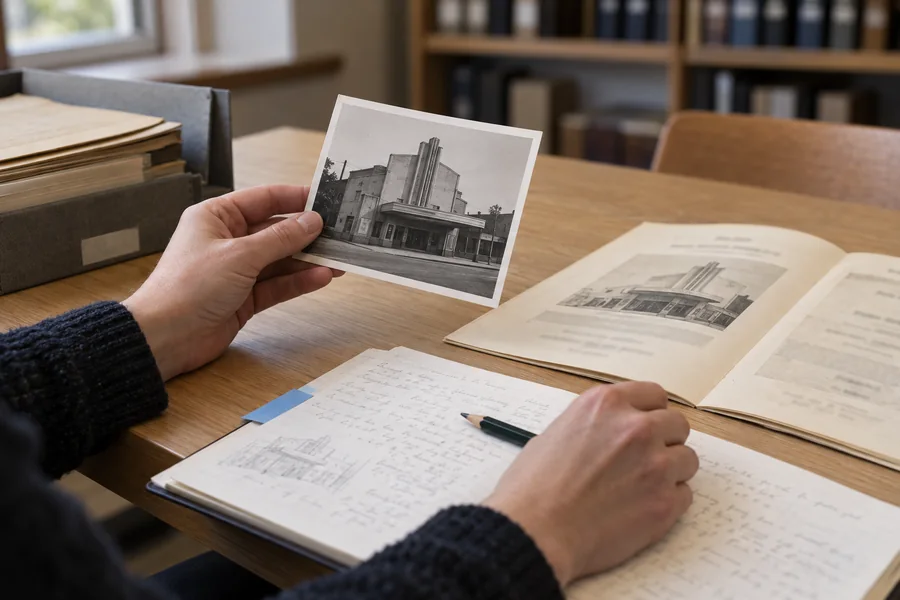
Give the source a location you can recover. Keep what it establishes separate from what still needs checking.
Original illustrative photograph, created for BookDraftLab.Protect room for invention and ordinary privacy
A notebook can begin in public observation without turning identifiable people into material you feel entitled to reproduce. Keep unnecessary personal identifiers out of notes. Change situations, combine invented elements and question the conclusions you draw. Observation gives you a starting point for fiction, not access to someone’s unspoken motives.
If a real conversation is sensitive, record the general dynamic rather than a transcript with names and distinguishing details. “One person offers help that would remove the other’s choice” can lead to many fictional situations. You do not need to preserve the original people to explore the difficulty. These are considerate working habits, not a substitute for specialist advice where a project raises particular publication concerns.
Your own private material also deserves a considered storage choice. Decide what belongs in a notebook that may be misplaced, shared or synchronized. Keep records of reading sources, project notes and personal reflections separate when that makes them easier to handle. A browser note is convenient working space; it should not be treated as a secure vault or your only copy.
Simplify when the notebook becomes another obstacle
If you stop opening the notebook, reduce the entry format. Try a date, one observed detail and one question. If you collect constantly but never draft, make the next session a use session: select one entry and write a short experiment before adding anything else. The remedy should address the behavior that is blocking the work.
If your notes feel repetitive, change the object of attention. Spend a page on how people negotiate space rather than how they look. Follow the sequence of an ordinary task. Record silence, interruptions or the practical consequences of weather. You are training a wider range of noticing, not forcing yourself to find a remarkable incident every day.
If the notebook has become intimidatingly neat, reserve a deliberately rough page for failed versions. Sal can write three incompatible explanations for the same tapping without choosing any. This keeps the notebook open to uncertainty. Its value is not that it preserves an impressive account of being a writer. It is that a half-heard pattern can become a question, an experiment and eventually a scene worth revising.
Turn the remembered pattern into an exchange.
BOOKDRAFTLAB / ORIGINAL TEACHING MATERIALThe visitor tapped four times on the counter. The clerk left the cupboard open.
“You have been here before.”
“First time.”
He set an empty cup between them. The visitor looked toward the side door, then tucked both hands under her bag.
“What was lost?” he asked.
She gave him a description of the umbrella. It was the first part of her answer he could write on the form.
An original illustrative specimen. Adapt the method to your own material.
Take one sound from note to scene
- Choose an ordinary sound from your surroundings, or invent one and label it as invented. Record its pattern, material quality and what makes it begin, stop or change.
- Write the observation separately from three possible explanations. Keep at least two explanations incompatible so you do not settle on the first interpretation automatically.
- Move the sound into another setting. Choose a viewpoint character who has a particular reason to notice it and another person who interprets it differently.
- Draft a short exchange in which the sound changes one question, decision or action. Continue through the immediate result rather than ending at recognition alone.
- Read the scene without the sound. Note what disappears, then keep, revise or remove the detail. Return a brief finding to the notebook so the experiment remains discoverable.
One clear observation, three fictional possibilities and a short scene with a recorded result. Store a simple link or page reference between the note and the experiment so they can inform each other later.
Can you retrieve one observation, explain its original context, and show how a linked writing experiment changed or developed what first caught your attention?
Make your own version here.
Common questions
Do I need to write in my notebook every day?
A regular habit can help, but a missed day does not make the notebook useless. Choose a rhythm that includes returning to material as well as collecting it. A small number of specific entries that become experiments can serve your writing better than daily pages you never revisit.
Should a notebook be organized by project?
Separate project records when you need reliable continuity, but let unassigned fragments remain flexible. A simple index or a few labels can be enough. If organizing a note takes longer than capturing it, keep the entry rough and decide its home when you next review a small batch.
What if everything I notice seems ordinary?
Record the ordinary event precisely and look for a change within it. A routine becomes interesting when someone breaks, resists or misreads it. You can also ask a fictional question that transforms the observation. The notebook does not require remarkable experiences; it needs recoverable details and room to try possibilities.
Sources and further reading
These sources support further investigation. Check requirements at the relevant publisher or platform before a submission.