


BookDraftLab’s editorial policy.
The purpose of the material is to make a writing task clearer. This page explains how to read the guidance and what it does not claim.
- Examples
- Original and identified as invented
- Product images
- Actual Fyrlo screens
- Corrections
- Through the operator’s contact route
Original examples, specific tasks.
Guides are attributed to the BookDraftLab editorial team as an organization. They are not presented as personal case studies by a named novelist, editor, or teacher unless such a contribution is explicitly identified. Our scenarios, book titles, excerpts, and before-and-after passages are invented teaching examples. They do not represent published books, client results, or an independently measured writing outcome.
We organize articles around a practical intent and merge closely related questions where they belong in the same useful explanation. Each long guide should offer a distinct throughline, a concrete example, an exercise, and relevant further reading. Word count supports depth, but it is not a reason to repeat advice that does not help the task.
Sources and changing requirements.
Educational sources support further exploration of writing concepts. Links to a university, professional body, publisher, or platform do not imply endorsement. We distinguish our own exercise from a rule set by a destination responsible for accepting or distributing work. Where a policy can change, consult the linked current source before acting on it.
The website does not determine copyright status, grant permissions, or interpret every submission contract. AI use, private research, quotations, and sensitive life writing may involve requirements beyond a general guide. The article on recording assistance directs readers to check the specific destination rather than assume there is a single universal disclosure rule.

Read for one kind of change before marking the next version.
Original editorial illustrationProduct material and illustrations.
Fyrlo links lead to its App Store and Google Play listings. Descriptions use supported features rather than promises that a tool will produce an original, accurate, publication-ready book. Existing native app screenshots are identified as product screens and may differ from a later version. No synthetic screenshot is presented as a working app feature.
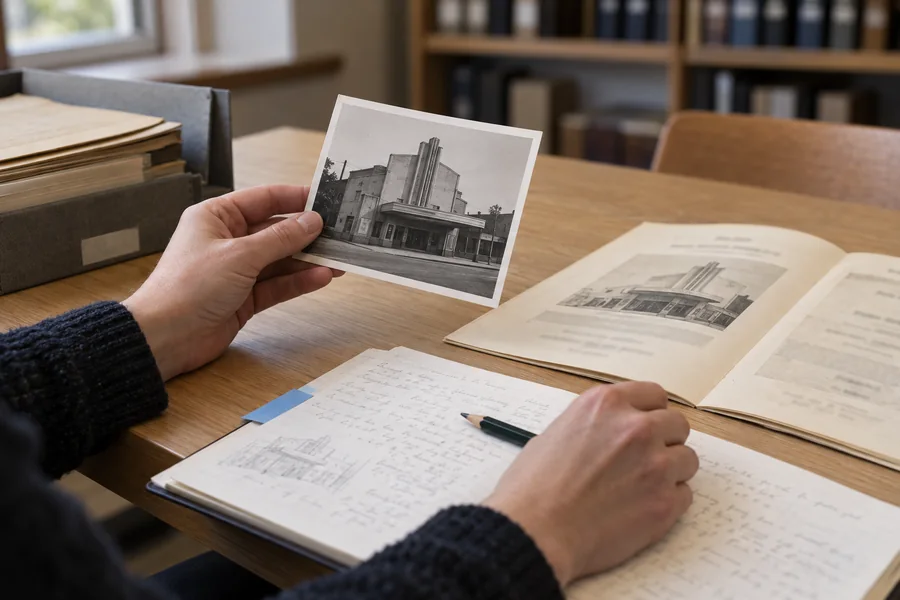
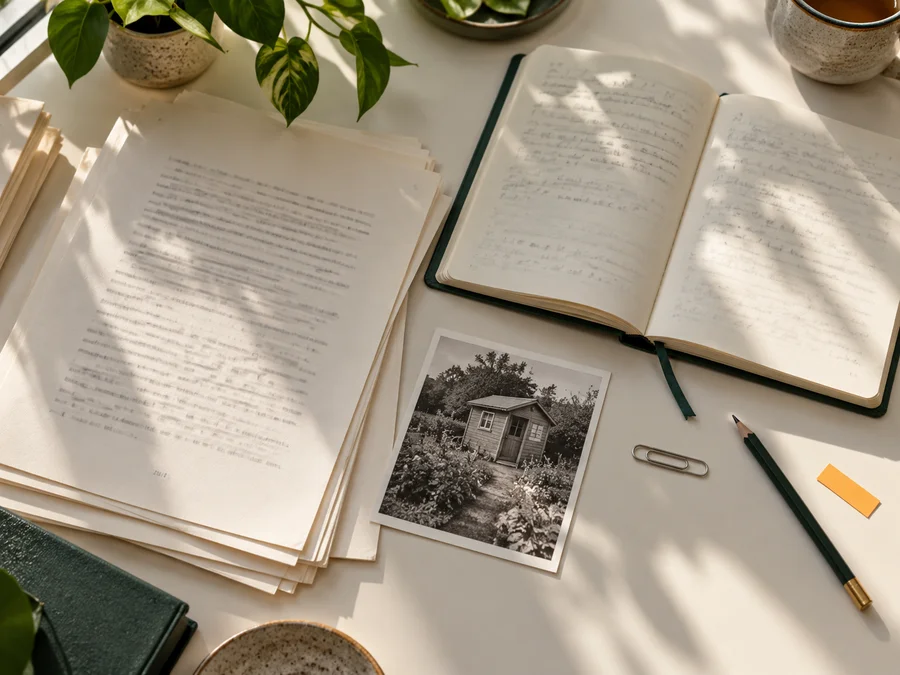
The website’s editorial photographs were generated as illustrative writing scenes. They do not document real customers, authors or reported events. Diagrams are original teaching graphics. The six local browser tools are deterministic organizational aids; they do not call a writing model or claim to evaluate manuscript quality.
Corrections and accessibility.
If a passage appears incorrect or unclear, use the operator’s contact route and include the page address, a short relevant quotation, and the concern. A source link is useful when it supports a factual correction. For a broken tool, describe the selected inputs and what happened without sending a private manuscript or access details.
We aim for readable pages, semantic headings, labeled controls, keyboard-accessible navigation, reduced-motion support, and print-friendly layouts. A request about an individual book does not become an editorial service agreement through this website. We review website issues within that scope and do not promise a response time or a particular publication result.