


Compare a few ideas through the same small writing test. For each, identify a person or subject, a sustained difficulty, several different choices, and a practical demand you can meet. Choose the idea whose test gives you specific material you want to investigate. Set a review boundary for that experiment and save the others with brief notes, so choosing one project does not require abandoning every alternative forever.
Useful when several promising book ideas compete for attention and switching keeps replacing actual writing.Having several ideas can be as paralyzing as having none. One promises a spectacular setting, another carries a personal memory, and a third sounds easy to explain. Switching between them preserves the excitement of possibility while postponing the less comfortable question: what would you actually write after the opening?
Choose with evidence from small tests. This workshop follows three fictional seeds: an island that appears on different maps, a bakery where customers exchange unfinished letters, and a volunteer reopening a neglected observatory. We will develop the observatory seed through Suri, whose father helped build its reputation. The aim is to discover what each idea asks of its writer, then make a bounded commitment rather than declare one premise permanently superior.
Separate the spark from the book-sized possibility
A spark can be a location, image, voice, question or impossible event. It deserves attention even when it is not yet a book premise. Problems arise when you expect an attractive image to produce a sequence of events automatically. “An observatory on a windy hill” supplies atmosphere. It does not tell you whose life is disturbed or what could develop beyond a tour of the building.
Expand each seed into four notes: what attracts you, who might be affected, what becomes difficult and what remains unknown. For the observatory, the attraction is a place built to look outward that has become inward-looking. Suri wants to reopen it for local children. An old log attributes the town’s celebrated discovery to a person whose name was removed from the public account.
The new difficulty is not simply finding a hidden document. Suri must decide whether to challenge a story that gives her family belonging. That tension may produce a novel. It could also support a short story centered on one public event. Keep the container open until the material has demonstrated its scale.
Notice the kind of curiosity each idea creates
Ask what you would keep investigating even if nobody praised the premise. Curiosity can concern people, form, place, moral difficulty or a practical process. You do not need all of these. You do need more than the satisfaction of having thought of something unusual. An unusual hook becomes familiar to its own writer surprisingly quickly.
For each seed, complete several questions without trying to answer them. The disappearing island raises questions about maps, ownership and memory. The letter bakery invites questions about anonymity, responsibility and small acts of interference. The observatory creates questions about public credit, inherited loyalty and what teaching children honestly might require. Notice which questions produce further, more specific questions.
Distinguish productive uncertainty from an empty gap. “I wonder how Suri would respond if her father admitted he knew” points toward an interaction. “I have no idea what anybody wants” may need more invention before a fair test. Neither state is shameful. Labeling them accurately keeps you from mistaking a lack of development for mysterious depth.
An old observatory.
A disputed credit in the exhibition.
Suri must choose which page to display.
Test whether the situation produces different choices
A book needs variation within a recognizable central concern. Write three situations the idea could create, then compare what the main person must decide in each. If every situation asks the same question with a louder obstacle, the material may sustain a shorter form or need a different source of complication.
Suri first chooses whether to copy the disputed log before reporting it. Later, she must decide how much uncertainty to reveal to a teacher organizing a visit. Finally, she may have to correct her father in a room where he expects her support. These decisions involve evidence, responsibility and intimacy. They share a concern without being interchangeable scenes.
Do the same test for the alternatives. If the bakery gives you only a succession of touching letters, ask who has permission to read them and what happens when a reply reaches the wrong person. If the island supplies only scenery, introduce a person whose work depends on reliable boundaries. The test develops the idea; it should not merely reward whichever seed arrived most complete.
A woman restores an old observatory and discovers a secret about the stars. The building is beautiful and mysterious.
While preparing the observatory for a school visit, Suri finds a log naming an uncredited observer. Her father asks her to keep the disputed page out of the exhibition until after a ceremony celebrating his team.
The developed seed specifies who wants what, how another person resists and why delay is itself a choice. The astronomical discovery still needs invention and research; the human difficulty is already available to test.
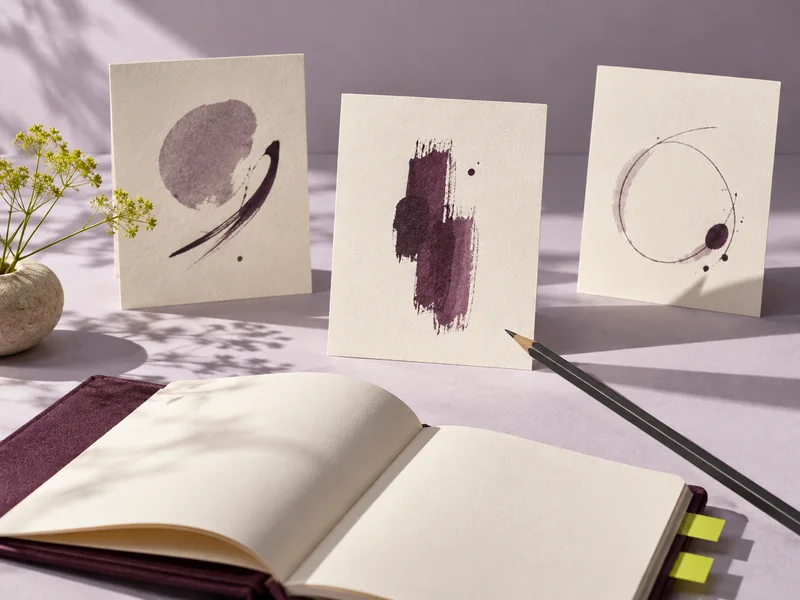
Give two possibilities a comparable writing test before choosing the project to develop.
Original editorial illustrationLook for a possible change, not a complete twist
Imagine what could be different at the end. You are checking for movement, not proving that you can surprise a reader. A possible ending might change a relationship, an understanding, a community practice or the protagonist’s behavior. It can remain uncertain while showing that the beginning has somewhere meaningful to go.
Suri could begin by treating the observatory as a monument she must preserve and end by treating it as a place where accounts can be questioned. That change permits several outcomes. The claim in the log might be confirmed, partly mistaken or impossible to settle. Each version can matter if Suri learns to represent uncertainty honestly instead of replacing one heroic story with another.
If your only possible ending is “the mystery is explained,” ask who must live differently because of the explanation. If nothing changes, perhaps the pleasure lies in a shorter puzzle or atmospheric piece. That is a useful discovery about form. Avoid adding a world-threatening climax simply to make a quiet but significant idea appear large enough for a novel.
Compare ideas through the difficulty of writing them.
Two ideas can both sound attractive: a novel about a lost seed collection and a practical guide to preserving family recipes. A fair test gives each a task instead of comparing a polished pitch with a vague ambition.
Two comparable experiments
- Seed collection
Write the scene in which somebody refuses to return it.
- Family recipes
Explain one substitution, with a test and its limits.
- Compare afterward
Interest in the work; missing material; next question.
Give both experiments a similar amount of attention. Then record what writing them required. The novel may need a relationship you want to investigate; the guide may depend on recipe testing you cannot currently do. That practical difference matters more than which premise sounds impressive. Choose the project whose next useful experiment you are willing and able to make, while keeping the other idea available for another season.
What if both tests work?
Choose a short commitment, such as two further scenes or one fully tested explanation. Decide what you will learn during that commitment and when you will compare again. You do not need to pronounce one idea permanently superior to begin working on the other.
Compare the practical demands you can actually meet
An idea can be compelling and poorly matched to the project you can undertake now. Identify the demands that affect your ability to draft responsibly: research, access to sources, technical complexity, emotional distance, number of viewpoints and the scale of the invented world. Practical fit is not a judgment on the idea’s artistic value.
The observatory story needs credible procedures for observing and recording, a plausible institutional history and careful handling of disputed credit. It does not require the writer to invent a new astronomical discovery immediately. The first test can use a fictional observation whose exact scientific significance remains a marked research question. Keep the emotional choice separate from facts you have not checked.
For the island, geographical rules may determine nearly every scene. For the bakery, handling other people’s letters creates ethical questions that deserve thought. Write the particular demand beside each seed and decide whether you want that work. “Needs research” is too vague to compare; “requires understanding how a historical observation could be independently checked” gives you a manageable investigation.
Make comparable tests instead of endless new premises
Choose a modest test you can apply to all three ideas. One option is a short encounter where someone asks for something and receives an answer they did not want. Another is a page describing the central person before and after a discovery. Keep the approximate scope similar so a polished favorite does not compete against two undeveloped summaries.
For Suri, write the conversation where her father asks to remove the log from the exhibition. For the bakery, write a customer demanding the return of a letter already answered. For the island, write a boat operator refusing a route that was safe yesterday. These tests reveal voice, resistance and your own willingness to keep writing through inconvenience.
Afterward, record observations rather than scores that pretend to be objective: “I found two motives for the father,” “the bakery exchange repeated an explanation,” or “the island demanded rules I enjoyed inventing.” A number can conceal the reason for a choice. A short observation tells you what to develop next and whether the difficulty itself is interesting.
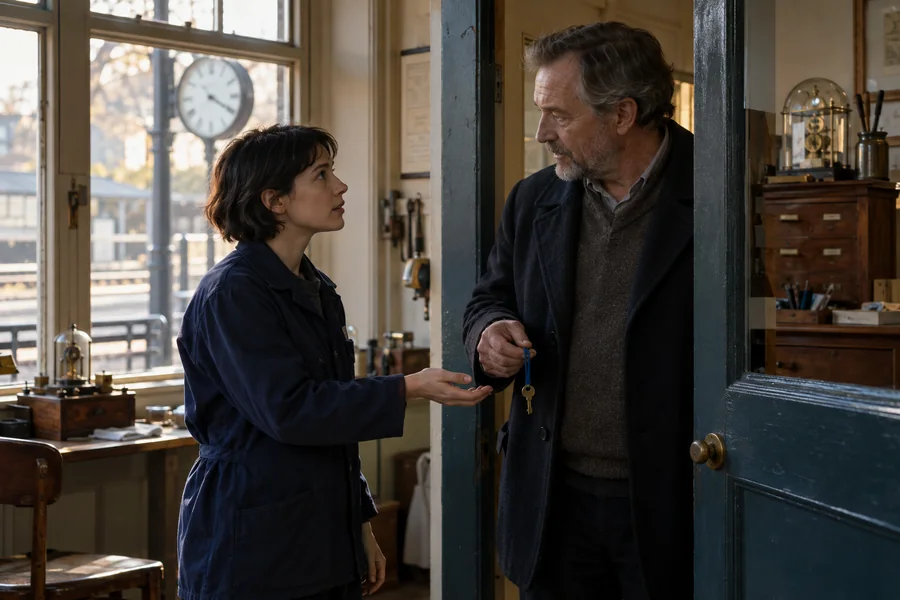
A place, a request and a boundary. Follow the response until somebody has to make a different choice.
Original illustrative photograph, created for BookDraftLab.Choose a commitment boundary and park the others well
Make a decision small enough to keep. Commit to developing one idea through a defined piece of work, such as several connected scenes and a rough route to an ending. Avoid promising to complete a whole novel before you have tested its main difficulty. Also avoid revisiting the choice at every sentence that resists you.
For the observatory project, the boundary could include Suri finding the log, confronting her father and preparing the revised school visit. During that sequence, new bakery or island ideas go into a parking document. Record the new possibility in a few lines and return to Suri. This preserves the idea without letting it become an escape hatch from ordinary drafting problems.
At the boundary, review the same questions you used to choose: are there distinct consequential choices, a possible change and demands you want to meet? You may continue, narrow the form or choose another seed. The value of the commitment is that the decision now responds to written evidence rather than the temporary glamour of an untouched alternative.
Troubleshoot the fear of choosing the wrong book
The perfect premise cannot remove the uncertainty of writing. If you keep searching because every idea resembles an existing story, describe the particular relationship, situation and consequence you want to explore. Familiar elements can produce different books. Claiming that a premise has never existed is unnecessary and usually impossible to establish.
If you are choosing only the easiest idea, ask whether ease means manageable scope or lack of personal investment. The first can be sensible. The second may make the long middle harder. Conversely, choosing the most emotionally charged material is not automatically braver or better. You can decide that a subject needs more distance before it becomes a project.
If none of the tests produces curiosity, stop ranking the existing seeds and collect different material. Visit a public place, study a process, read outside your usual field or write about a contradiction you cannot settle. Bring back a specific question. The next useful idea may begin with attention, rather than an effort to manufacture a more impressive hook.
Test the idea through an uncomfortable request.
BOOKDRAFTLAB / ORIGINAL TEACHING MATERIALSuri laid the log beside the exhibition labels. Her father turned it over before reading the name.
“Not for the school visit,” he said. “We do not know enough.”
“Then we can put that on the label.”
He smoothed the printed account of his team’s discovery. “Your teacher has already approved this.”
Suri put the blank label beneath the glass. For the first time that morning, he stopped arranging the display.
“What are you going to write?”
An original illustrative specimen. Adapt the method to your own material.
Build a three-idea decision sheet
- Give three seeds equal space. For each, write the attraction, an affected person, a difficulty and one unanswered question. Keep the descriptions plain enough to compare.
- Invent three different choices each seed could produce. Underline the option where one choice naturally changes the conditions of the next.
- Write one possible end change and one specific practical demand for each. Separate facts requiring research from fictional decisions you can make yourself.
- Run the same short writing test on all three. Record what became more interesting, what stayed vague and which difficulty you wanted to investigate.
- Choose one idea and name the work that will complete its next trial. Park the other two with enough context to recover them later, then schedule the first action for the chosen project.
A comparison grounded in three small tests, one selected project and a clear review boundary. Add a brief reason for the choice so you can revisit the evidence rather than reconstruct your mood.
Can you explain your choice using something discovered in the writing samples, name the next test, and say when you will review the project again?
Make your own version here.
Common questions
Should I choose the idea that sounds most marketable?
For this exercise, choose using your creative interest, the idea’s capacity to develop and its practical demands. A premise that is easy to pitch may still be difficult to sustain. Commercial positioning is a separate investigation and cannot tell you whether you want to write the particular book.
Can I combine two ideas instead of choosing?
Yes, if the combination creates one clearer central difficulty. Try a short test where the two elements directly affect the same decision. If they require separate casts, rules and endings, keep them apart for now; combining them may simply postpone the choice while increasing the workload.
How do I know a quiet idea is enough for a novel?
Test whether it produces changing relationships, consequential choices and more than one kind of situation. Scale can come from depth and accumulated consequences. If the material resolves naturally in a small span, consider a shorter form instead of adding incidents that do not change its central concern.
Sources and further reading
These sources support further investigation. Check requirements at the relevant publisher or platform before a submission.