


Book project brief
Turn a loose idea into a small project you can test.
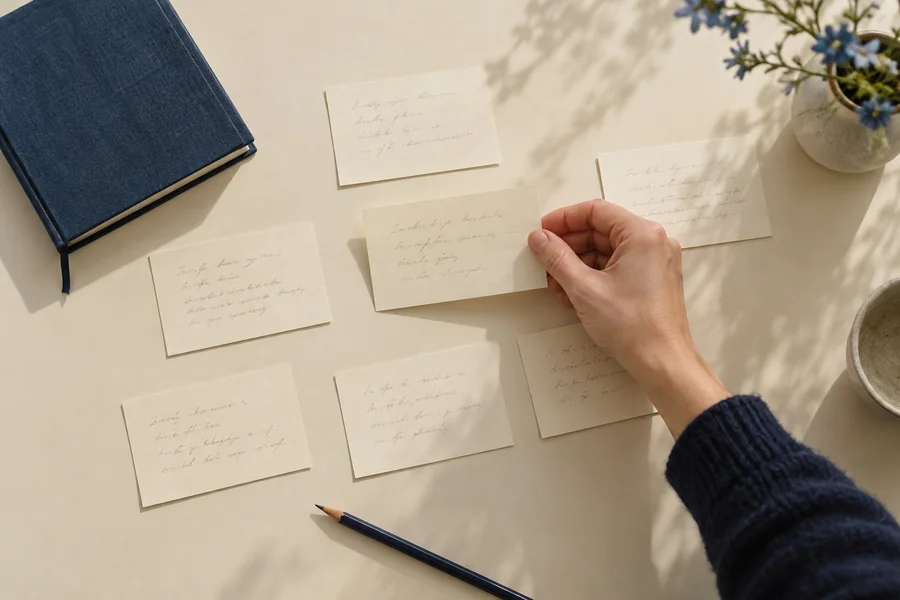
Your book, taking shape.
Note removed.
Backups, restore & saved data
Export a JSON backup to restore these notes in another browser. An import is checked and previewed before anything is saved.
Clear the saved notes for this tool from this browser? Export anything you want to keep first.
Name the project
Choose the reader, central promise and boundary.
Choose a test
Keep one passage that can test the direction.
Keep a copy
Save locally if useful, then export work you want to retain.
One finished brief, before the whole book is planned.
- Working title and reader
- The Winter Route — a quiet contemporary story for readers interested in work, loyalty and changing family roles.
- Central promise
- A substitute bus driver must choose whether to keep an unofficial stop that helps her father but disrupts somebody else’s journey.
- Boundary
- One winter timetable and its relationships; no complete history of the transport system.
- Next small task
- Draft the conversation in which a passenger asks why the bus stopped before the bridge.
An original illustrative specimen. Adapt the method to your own material.Return to the workspace ↑
Does the brief tell you what to write next?
- Too open
- A book about community.
- Usable next action
- Draft the scene in which a neighbor refuses to lend the hall key.
Use the central promise to choose one action that belongs in the project. If the scope says “one summer,” a chapter covering twenty years needs a reason or a boundary change. Update the brief when a writing test changes your understanding; keep a separate exported copy of the decision you want to remember.
What if several books appear in one brief?
Separate the promises and choose one test for each. Keep the material you defer in another note or document, rather than making the current brief responsible for every possible project.

Locate the passage, separate the reaction from a diagnosis and choose one change worth testing.
Original illustrative photograph, created for BookDraftLab.Use the tool with a clear task.
Turn a loose idea into a book you can test. Open a note below for an example or a closer explanation.
Before you begin
A project brief is a temporary description of the book you are trying to make. It helps you choose a sample to write and notice when an attractive side idea belongs elsewhere. The brief asks for a reader, a central promise or question, a boundary, and a next task. Use plain language. A rough sentence you understand is more useful than a polished pitch that leaves the direction unclear.
The working title is a label, not a publication decision. For fiction, the promise can describe an experience, conflict, or question. For practical nonfiction, describe what the intended reader may understand or be able to attempt. Keep the scope narrow enough that you can test the idea with one scene or explanatory passage. You can update the saved brief whenever the writing teaches you something new.
Make the next task observable.
Instead of “write more,” name a piece of work you can recognize: compare two possible narrators, draft the first conversation, or explain one decision with an example. If the task depends on a missing fact, make checking that fact the next step. A clear beginning reduces the amount of deciding you have to do when the project is next open. The brief should make a writing session easier to enter, not become a form you feel obliged to perfect.
Use the boundary to protect the project.
Writing what does not belong can reveal why a plan feels too large. A book for first-time repair-café volunteers need not also be a technical manual for every kind of appliance. A family mystery need not contain the entire history of a building. Save the side material separately and test whether the narrower version still interests you. Scope is a working decision; you can revise it deliberately after seeing a sample.
Compare the sample with the promise.
After a scene or sample chapter exists, read it beside the brief. Name one place where the material fits the intended experience and one place where it asks for a different project. A quiet mystery may have become a family conversation; an instructional chapter may have become a personal account. Neither discovery is automatically a mistake. Decide whether to revise the brief or the sample, and write why.
Keep a copy before replacing the current brief so the change remains understandable later. The form has done its job when it helps you choose a next task. You do not need to make every field sound like a marketing pitch before you are allowed to begin drafting.
Questions about this tool.
Does this produce an outline?
It creates a project brief from your own notes. It does not generate chapters or assess the idea. Use the brief as a reference while you try a scene, chapter sample, or small outline.
Can I keep more than one project here?
This tool keeps one current brief in this browser. Download a copy before replacing it, or use separate text files for different projects. A local save is not a synchronized backup.
Read the matching lesson.
Use a matching guide to examine the choices through a worked example, then return here to keep your own result.