


Use AI brainstorming for a bounded decision, with your own provisional answer and criteria written first. Supply only the context needed, ask for a few meaningfully different alternatives, and inspect each against the book you want to make. Treat added factual claims as questions to verify. Choose, change, or reject the suggestions with reasons, then close the output and write a test passage yourself. A paper comparison can serve the same purpose.
Useful when optional AI brainstorming produces many suggestions but leaves the book's next decision no clearer.An AI response can give you more possibilities than you need. The useful part of brainstorming is deciding which possibility deserves your attention and why. If you keep requesting a better idea without naming what better means, you can accumulate pages of suggestions while the book remains untouched. A bounded session gives the tool a supporting role and gives you a stopping point.
Our example is a writer planning a quiet novel about Orla, a mapmaker hired to update a walking map of an island where she once lived. An old friend refuses to tell her why one familiar path has disappeared from the local map. The writer wants a story about belonging and competing memories, with no murder investigation or supernatural explanation. All sample prompts and possible responses in this guide are invented illustrations, not results from a product test.
Decide what help you actually need
A book idea can be stuck at several different points. You may lack a central question, have too many possible protagonists or know the story but not its scale. Name the current decision before opening a tool. Give me a book idea delegates almost everything. Help me compare two reasons Orla might accept this commission keeps the problem small enough to evaluate.
Write your own first answer. Perhaps Orla needs the fee and wants to prove she can describe the island more accurately than the people who stayed. That combination contains practical pressure and a vulnerable belief. The tool can help you test alternatives, but you already have something to protect or challenge. Without a starting position, fluency can become your only selection criterion.
A manual route is equally valid: ask the same question on paper and write three different answers. Use AI only if the additional perspective helps you notice a possibility or assumption you can examine. You do not need to include it in every stage of planning.
Make a brief that contains decisions, not your archive
Give the tool the minimum context needed for this question. A short fictional brief can name the protagonist, immediate task, tone and constraints. It rarely requires your complete manuscript, private correspondence or identifying details from someone else's life. Keep sensitive material outside the prompt unless you have a clear, appropriate basis for sharing it and understand the particular service's handling of it.
For Orla: an adult mapmaker returns to an island to update its walking map; she values accuracy but confuses official records with shared understanding; an old friend resists a missing-path inquiry; the book is a quiet contemporary novel. The tool now has relevant limits without receiving a chapter you are not comfortable uploading.
Read the selected tool's current terms and privacy information before using it. Storage, training controls and account settings differ. Do not assume a local-looking interface means the underlying processing stays on your device. If you cannot establish an acceptable sharing arrangement, use an invented minimal example or continue manually.
Orla returns to update an island walking map.
A realistic setting; no crime or supernatural plot.
Three personal reasons, each forcing a different choice.
Ask for alternatives that differ in a useful way
Request a small set with an explicit dimension of difference. Ask for three motivations that change the pressure on Orla, rather than ten exciting twists. Limit the requested length so you can compare the underlying ideas. A short answer makes it easier to see whether the suggestions are genuinely different or the same premise dressed in new adjectives.
One possibility might make the commission a financial necessity. Another makes it a way to repair a damaged friendship. A third makes it an attempt to settle a disagreement about who can speak for the island. The writer can compare those pressures against the book's intended question. None is automatically good because an AI produced it.
Ask the tool to identify assumptions as possibilities instead of treating them as facts. If it invents an island rule, a history or a claim about mapmaking, record that as unverified material. A plausible detail can be a useful research question, but it is not evidence that the detail is true.
Write an amazing bestselling novel idea about a mapmaker. Make it unique and emotionally powerful.
I am planning a quiet contemporary novel about Orla, an adult mapmaker returning to an island to update a walking map. Suggest three different personal reasons she accepts the commission. Keep each under four sentences. Preserve a realistic setting and avoid crime or supernatural plots. For each, name one choice it could force her to make. Treat every added detail as fictional, not as a fact about real mapmaking.
The revised request defines a decision the writer can inspect. It cannot ensure originality, quality or accurate factual detail.

Compare suggestions against your own criteria, then test the chosen possibility in a passage.
Original editorial illustrationEvaluate suggestions against the book you want to write
Use criteria you chose before reading the response. For this project, the idea should create a meaningful choice, fit a quiet contemporary tone and leave room for relationships beyond the missing path. It should also interest the writer enough to explore without requiring a scale of research or plot the writer does not want to undertake.
Make a brief decision note for each candidate: keep, change, investigate or reject, with a reason. The financial-need version may produce a clear deadline but feel too external on its own. The friendship version may fit the theme but need a practical reason for Orla to stay. You can combine parts thoughtfully, while checking that the combination remains coherent.
Be wary of selecting the most elaborately explained option. Length and confidence can make a suggestion appear more developed than it is. Restate it in one plain sentence. If the sentence still interests you, try writing a small scene from it. The scene will test more than another page of promotional description can.
Evaluate an option by what it makes you write.
For an invented realistic novel about restoring a village noticeboard, an optional brainstorming request offers three reasons a notice has gone missing. Compare their consequences rather than the confidence of the suggestions.
A human decision record
- Option to inspect
A volunteer removes it to protect a neighbor.
- Boundary check
Fits the realistic setting; still needs a specific relationship.
- Writing test
Draft the exchange in which the neighbor asks for it back.
Keep your own criteria beside the alternatives: what kind of relationship, pressure and scale does the book need? Reject an option if it relies on facts you cannot support or sends the project somewhere you do not want to explore. Then close the suggestions and draft a short test in your own document. Record what, if anything, you retain. The same comparison can be made using possibilities you invent on paper.
What if every suggestion sounds generic?
Return to your own observed details, constraints and unresolved question. A more elaborate request may only produce more fluent generalities. Write one imperfect possibility yourself, identify its specific difficulty, and decide whether outside alternatives are still useful.
Use questions to expose an assumption
Sometimes the best brainstorming contribution is a question. Ask what the plan takes for granted or what decision remains missing. The response might point out that the mapmaker expects one official map to satisfy everyone. That can help the writer examine the premise without accepting a replacement plot. You remain responsible for deciding whether the question reveals a real issue.
Turn a useful question into your own test. Who uses the path, and for what different purposes? A resident may value privacy, a walker may need access and a shopkeeper may want visitors. These positions can create tension without requiring a secret villain. The writer can research the relevant real-world matters later and avoid presenting an invented access rule as fact.
Do not ask the tool to certify that the premise is original or culturally accurate. It cannot settle those matters for you. You can compare existing books yourself, seek knowledgeable readers and investigate claims through appropriate sources. Treat generated reassurance as another piece of text to inspect, not a clearance certificate.
Keep style exploration separate from imitation
You can describe a desired reading experience without asking for another writer's recognizable voice. Name qualities you can examine: restrained description, close attention to physical work, dialogue with unfinished thoughts, or a reflective narrator. Then test how those choices function in your own sample. This gives you craft decisions rather than an instruction to reproduce someone's distinctive expression.
For Orla's story, the writer may choose concrete mapmaking actions and brief observations of social discomfort. A sample could show her carefully drawing a path while avoiding a friend's question. The next task is to write that moment personally and decide what the prose needs. A tool's description of a style should not become a template that makes every paragraph sound alike.
If a suggestion resembles a passage or premise you recognize, stop and investigate rather than assuming that changing a few names resolves it. Maintain a list of influences you knowingly consult. Do not promise readers that an AI-assisted idea has been checked against all existing work.
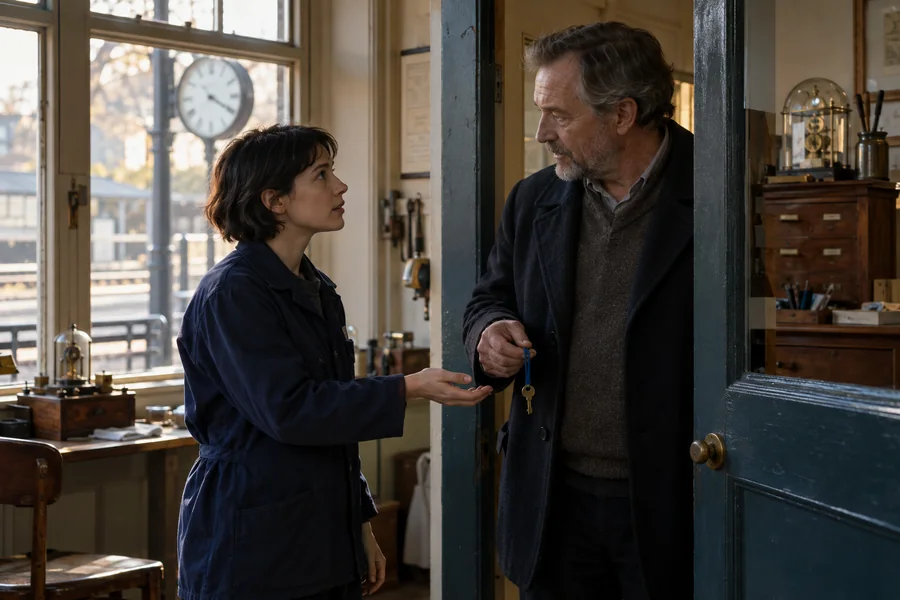
A place, a request and a boundary. Follow the response until somebody has to make a different choice.
Original illustrative photograph, created for BookDraftLab.Convert the chosen possibility into a human working plan
Close the response and write the current premise in your own words. State who acts, what they want, what complicates the task and what question the book explores. If you cannot explain the plan without copying the tool's paragraph, it may still be a suggestion you admire rather than a project you understand.
The writer chooses this version: Orla accepts a paid commission to restore her professional confidence, then discovers that accurate lines cannot settle every disagreement about belonging. Her friend asks her to leave one path off the map. She must decide what kind of knowledge the map can honestly represent. That decision opens several scenes without requiring a finished chapter outline.
Next, list three things only you need to decide: the friend's reason, Orla's earlier departure and the consequence of publishing the map. Mark facts that require research separately. Brainstorming ends with a manageable next piece of writing, such as drafting the first conversation about the missing path.
Record the session and stop generating
Keep a compact record of the date, tool if used, purpose, relevant suggestions and your decision. Note whether any generated wording entered the manuscript. An idea conversation and accepted generated prose are different uses, and records are easier to keep now than reconstruct later. Check the requirements of your intended publisher or platform when the project moves toward submission.
Set a stopping condition before you begin another round. You might stop when you have three viable motivations and a scene to test, even if none feels perfect. More options can make the decision harder. If every suggestion introduces a new genre or expands the cast, return to your original question and constraints.
Measure the session by the decision it enables, not the amount of output it produces. A useful result may be that your first idea was already the one you wanted. It may also be that you prefer the manual process. In either case, leave the session with a concrete action the tool cannot perform on your behalf: choose what this book means to you and write the next attempt.
A request that leaves a decision for the writer.
BOOKDRAFTLAB / ORIGINAL TEACHING MATERIALI am planning a quiet contemporary novel about Orla, a mapmaker returning to an island to update a walking map. Compare three personal reasons she might accept the commission.
For each, give one choice it would force during the visit. Keep a realistic setting. Do not add a crime, supernatural event or factual claim about mapping practice.
I will use the alternatives to choose a scene to draft. Offer possibilities, not a finished premise, and keep any new character detail visibly fictional.
An original illustrative specimen. Adapt the method to your own material.
Run a twenty-minute idea comparison
- Write one current book-planning decision and your own provisional answer. Choose three criteria for evaluating alternatives.
- Make a short fictional brief that excludes unnecessary private material. If using a service, check whether its current handling of the prompt is acceptable to you.
- Request three short alternatives along one dimension, or write them yourself on paper. Identify every added factual claim that needs independent checking.
- Classify each option as keep, change, investigate or reject. Write a reason connected to your criteria instead of accepting the response's praise.
- Close the output, write your chosen premise personally and draft one small test. Record what you used and whether any generated wording entered your work.
A brief, three evaluated alternatives, a human-written premise, an initial scene or paragraph and a compact use record.
Can you explain the decision without quoting the tool's praise, identify any factual checks, and show a passage that tests the direction you chose?
Make your own version here.
Common questions
Can AI tell me whether my idea is original?
It can discuss similarities it happens to produce or recognize, but that is not a comprehensive originality check. Its response may miss existing work or invent comparisons. Read relevant books, investigate specific similarities and make your own choices. Do not treat a confident statement that an idea is unique as permission or proof.
What if I like the generated wording better than my own?
Identify what works: a clearer conflict, a useful image or a more direct sentence. Then decide whether you want to write an alternative yourself or retain generated material under the relevant terms and destination requirements. Keep an accurate record of what entered the manuscript. Substantial editing does not automatically change how every platform classifies generated content.
How do I avoid endless brainstorming?
Define the question, limit the number of alternatives and choose a stopping condition before the session. Test one possibility in actual writing instead of requesting another complete plan. If the same uncertainty keeps returning, write down the decision you are avoiding. More suggestions may not help with a choice that depends on your interests, values or willingness to do the work.
Sources and further reading
- Authors Guild: AI best practices for authors — professional guidance, not a universal rule
- Purdue OWL: Prewriting questions — further reading on developing ideas
These sources support further investigation. Check requirements at the relevant publisher or platform before a submission.