


How to Choose a Nonfiction Book Topic
Write three competing concept memos, choose one for a limited trial, and draft a passage that tests its feasibility.
Read the guide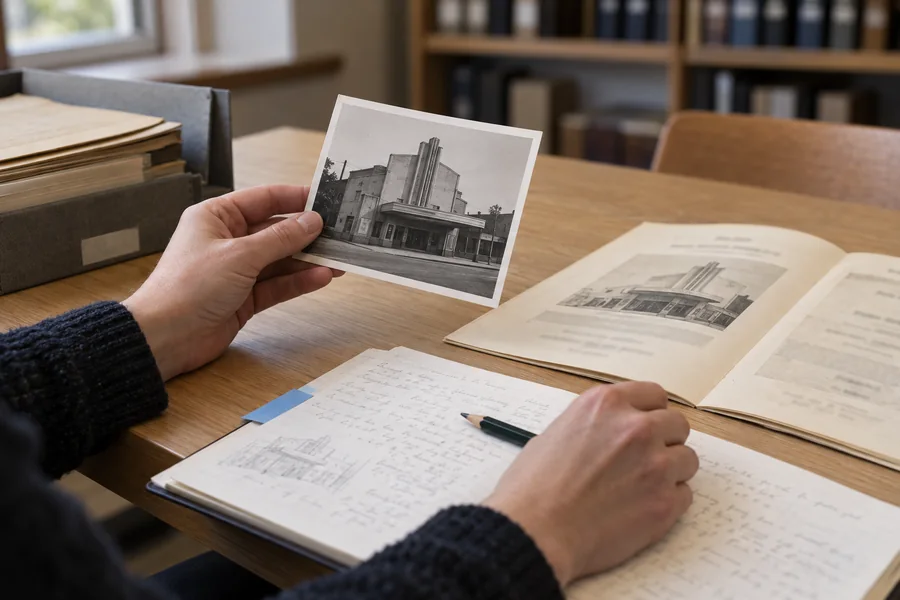
A nonfiction manuscript needs a relationship between its promise, its structure, and its support. An interesting subject is a beginning, but a reader also needs to understand why the material belongs in this particular book. Choose the question you can help them investigate and describe what falls outside it. That boundary helps you decide which research to pursue and which discoveries to keep for a different project.
This collection includes practical explanation and memoir because both require deliberate handling of material. A chapter teaching a process should connect claims to appropriate evidence and examples. A memoir makes choices about shape and emphasis while remaining accountable to memory, research, and uncertainty. Neither job becomes stronger when a gap is filled with a convenient invention presented as fact.
Find the right lessonStart where the uncertainty sits: the book’s promise, the available evidence or the order in which a reader needs the material.
Match one reader question with material you can obtain.
YOU’LL MAKE A supported scopeKeep source locations, interpretations and unresolved checks apart.
YOU’LL MAKE A recoverable evidence trailMap reader questions and the prerequisites between chapters.
YOU’LL MAKE A provisional chapter routeAn outline can expose a research gap, and research can change the scope. Keep these decisions connected without treating either a long source list or a detailed contents page as proof of a supported argument.
Chapter 3: Finding a room.
Which room can support this first event? Explain the comparison questions, examine two possibilities and identify what remains unconfirmed.
The reader knows why the example matters and what they should be able to do after reading.
Your turn: Name one reader question. List the explanation, evidence and example needed to answer it without inventing the missing facts.

Separate observations, source material and interpretation before building a claim.
Original editorial illustrationAn original illustrative specimen. Adapt the method to your own material.
Write three competing concept memos, choose one for a limited trial, and draft a passage that tests its feasibility.
Read the guideCreate a book promise, seven working chapter cards, and a test passage that leads to one explained structural change.
Read the guideMap one chapter's question, reasoning sequence, support, and transitions, then draft an opening and ending that complete the same movement.
Read the guideDraft one evidence-bearing paragraph, create three recoverable source entries, and attach a checklist of claims still needing verification.
Read the guideBuild a memory inventory and source log, then draft one scene with marked uncertainties and a separate reflective passage.
Read the guide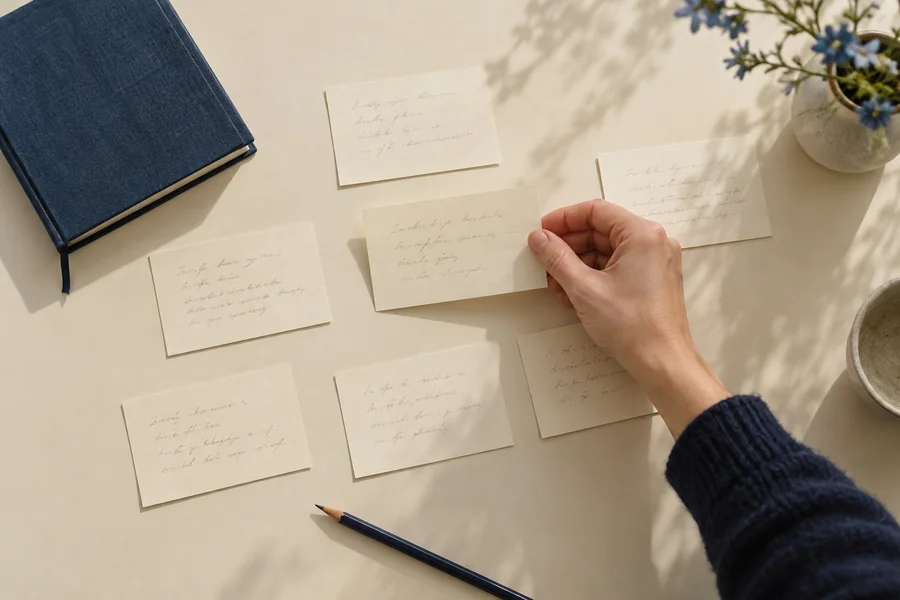
Treat the plan as a working arrangement. Let a passage test it before giving every chapter a permanent place.
Original illustrative photograph, created for BookDraftLab.Saving a link is not the same as checking a claim. Record the question, the source, what you actually examined, and where the material may be used. Mark a quotation as a quotation, keep page or section details, and separate your interpretation from the source’s wording. A research log can help you find the trail later. Sensitive interviews, permissions, specialist claims, and legal concerns may need a more appropriate process than a browser worksheet.
A practical chapter can move from a recognizable question to an explanation, a worked example, and a decision the reader can try. It does not need to summarize the whole book. Check whether the example really illustrates the claim and whether a limitation would change the advice. If two chapters appear interchangeable, describe their jobs in a reverse outline. The distinction should be visible in what the reader can understand afterward, not only in different headings.
A chapter plan can contain a placeholder for a claim you have not established. Mark it plainly, including the source or expertise needed to examine it. This lets you see how much the argument depends on material that is still provisional. If the central promise of the book rests on an uncertain claim, investigate that dependency early rather than building a large structure around an assumption.
Likewise, distinguish a personal observation from a general recommendation. A repair café that worked in one neighborhood can supply a useful example without proving the same arrangement suits every setting. Describe the relevant conditions, the limits of what you know, and the decision the reader still needs to make. Examples become more useful when their boundaries are understandable. For memoir, record the difference between remembered detail, documented detail, and interpretation.
You can shape a readable chapter while being explicit with yourself about where its material came from.