


Book research log
A source is more useful when you remember why you saved it.
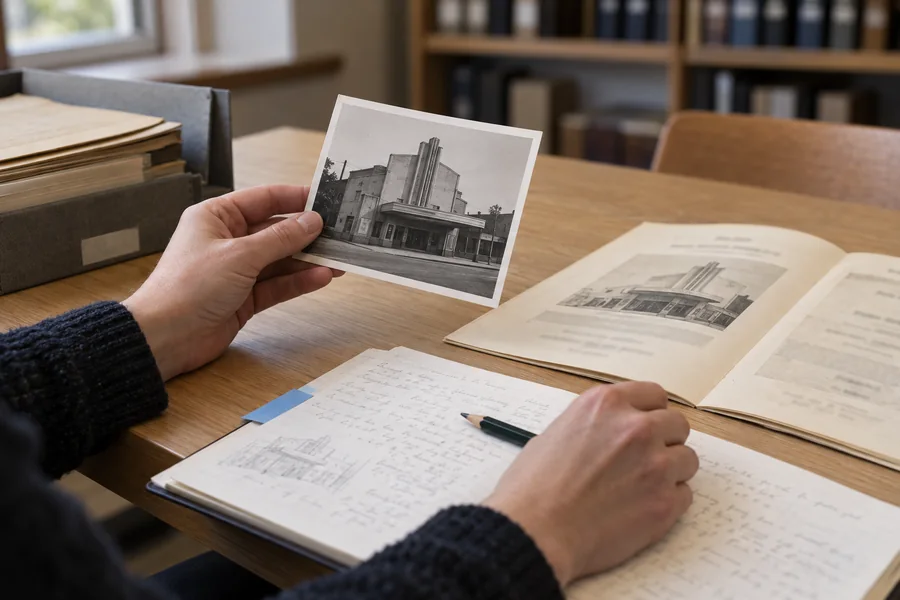
Keep the useful details.
Note removed.
Backups, restore & saved data
Export a JSON backup to restore these notes in another browser. An import is checked and previewed before anything is saved.
Clear the saved notes for this tool from this browser? Export anything you want to keep first.
Keep the question
Name what this source could help establish.
Record the location
Distinguish quotation, summary and interpretation.
Name the next check
Leave unverified details visible before building on them.
Keep a lead visibly different from evidence.
- Question
- When did the reading room begin offering evening talks?
- Source URL
- https://example.org/reading-room-catalogue — a reserved example address for this specimen, not an actual source.
- What was examined
- An invented catalogue description names a programme folder. The programme itself has not been read; the description is only a lead.
- Status and next check
- Unverified. Locate the actual programme, record its date and relevant page, then check exactly which claim the material supports.
An original illustrative specimen. Adapt the method to your own material.Return to the workspace ↑
A saved URL is only the beginning of a source note.
- Recoverable note
- Committee minutes, meeting date, item 4, paragraph 2.
- Claim boundary
- Supports the opening date; does not establish attendance.
Put enough location detail in “What did you examine?” to recover the evidence. Distinguish exact wording from your summary, and record what the source cannot establish in the verification note. Saving a URL does not retrieve, archive or verify its page. Keep research material you need in an appropriate separate record, respecting its access and reuse conditions.
What if one source supports several claims?
Use separate notes when the locations or verification questions differ. This makes the relationship between each claim and its evidence inspectable without forcing every observation into a single crowded entry.
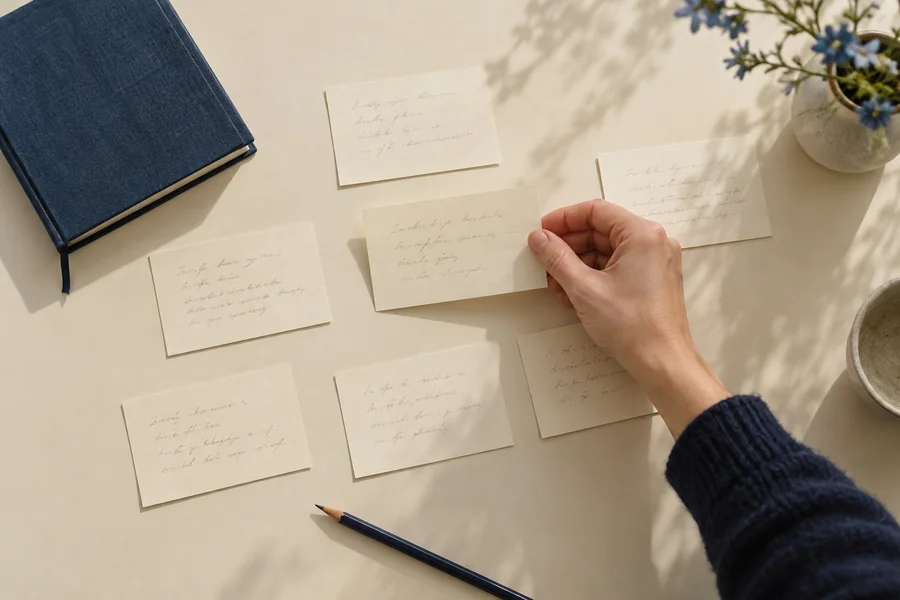
Treat the plan as a working arrangement. Let a passage test it before giving every chapter a permanent place.
Original illustrative photograph, created for BookDraftLab.Use the tool with a clear task.
Follow the reader’s question, then show your working. Open a note below for an example or a closer explanation.
Before you begin
Use this log to connect a research question with a source and the state of your own checking. A saved address is not proof that a claim is correct. Note what you actually examined: a catalogue entry, a full report, an interview transcript, or a page you have not read yet. Put the remaining check in the last field. You can export text or CSV when you want to work elsewhere.
The log accepts ordinary web source addresses. It does not open them automatically, check their contents, archive a page, or verify permission to reuse material. Keep page numbers, publication dates, access notes, and a distinction between quotation and summary in your own note. Do not store passwords, private interview details, or sensitive personal material in a browser worksheet.
Separate a source’s claim from your conclusion.
You may find a report that describes one organization in one year. That does not automatically establish a general rule for every organization. Record the scope of the evidence and the inference you are considering. If a source is quoted through another article, follow the trail to the original where possible. Mark the record as provisional until the relevant passage has been checked. A tidy row should make uncertainty visible rather than hide it behind a complete-looking form.
Give the source a job in the manuscript.
Add the chapter or passage where the research may be used. If the source no longer serves that job, keep it in a separate background file instead of adding another detour to the chapter. A reader needs enough support to understand the point, not every interesting discovery you made along the way. For specialist, consequential, or contested claims, choose appropriate expertise and review beyond this organizational tool. Research notes are working material, not a substitute for verification.
Record enough context to revisit the source.
Include a date, page, section, or other locator when the source permits it. A report’s main page may remain online while its contents or linked files change. Your note should distinguish the document you examined from the page that introduced it. If a claim arrives through a second source, mark that relationship and follow the trail where possible. Keep exact quoted wording clearly separated from your own summary.
The form cannot establish whether the source is reliable, relevant, current, or suitable for reuse; it helps you remember which checks you have and have not performed. A useful record gives a later reader of your notes a route back to the evidence, including any limits you noticed.
Questions about this tool.
Does saving a source copy its contents?
No. The tool saves only the fields you enter. External pages can change or disappear. Keep legitimate research records in a format suited to your project and respect any applicable access or reuse conditions.
Can the CSV be opened in a spreadsheet?
Yes. Fields are quoted to preserve commas and line breaks, and formula-like beginnings are neutralized on export. Review imported data before sharing the file, particularly if your notes contain personal information.
Read the matching lesson.
Use a matching guide to examine the choices through a worked example, then return here to keep your own result.