


Make a compact reference for decisions the manuscript needs you to apply consistently: spellings, names, relationships, terms, timing, and special text. Give entries short examples or locations, and distinguish an agreed rule from a pattern you have merely noticed. Keep unresolved queries separate. Resolve each against the book's context, preserve intentional variation, and update the sheet when the current draft changes so it remains a usable editing reference.
Useful when repeated names, terms, timeline details, or language choices need consistent decisions across a developing manuscript.A manuscript asks you to remember hundreds of small decisions. A place has two possible spellings. A character uses a different title in private. A journey takes one night in chapter two and three in chapter eleven. Memory can smooth over the inconsistency because you know what you meant. A style sheet puts the decisions somewhere you can inspect.
This workshop builds a practical record for an invented tidal fantasy, The Bell Below. Its apprentice, Omi, works at Rill House, where a submerged bell can be heard only at the lowest tide. The details are fictional. We will use them to distinguish language choices, story facts and unresolved questions, then make a record that supports revision without turning into a second novel.
Decide what the sheet needs to help you do
A manuscript style sheet records repeatable decisions and facts worth checking. It can include spelling preferences, special text treatment, names, locations, chronology and invented terms. It does not need to contain every piece of research or every possible detail of the world. Its purpose is quick, reliable retrieval during editing.
Choose a format you can search and update. A plain document with clear headings may be sufficient. A table can help when entries need separate fields for choice, evidence and status. Avoid selecting a complex tool before you know which questions recur. The best format is the one that lets you answer those questions without rereading the whole book.
For The Bell Below, begin with five headings: language, word list, people and places, time and world rules, and open queries. The headings are starting points, not a universal template. A contemporary family novel may need a detailed relationship record and little invented terminology. A nonfiction project may need source and terminology conventions instead of a magic-rule section.
Separate a chosen rule from an observed pattern
When you notice a recurring choice, record whether it is settled. A sheet that quietly treats every first occurrence as a rule can preserve an accident throughout the manuscript. Use simple states such as confirmed, provisional and query. Add a short reason when a decision could otherwise look arbitrary.
In the fantasy draft, “tidekeeper” appears as one word in early chapters and “tide keeper” later. The author prefers the single word because it names a distinct fictional role. That is a confirmed choice after review. The capitalization of “Lower Bell” remains a query until the author decides whether the phrase is a formal name or merely a description.
Keep changes visible when the distinction matters. If you settle the title in chapter nine, record that earlier occurrences still need checking. Do not assume that writing a rule automatically applies it. The sheet and the manuscript are separate objects, and both must be updated for the decision to become dependable.
Omi hears the bell at the lowest tide.
Established in S03 during Sela’s lesson.
S19 has a rising tide: error or deliberate change?
Record language choices with short examples
List the language conventions that recur in your manuscript, especially where more than one acceptable form exists. You might record the variety of English, preferred spellings, number treatment and quotation style. Choose conventions appropriate to the project; the sheet is not a place to declare one legitimate variety universally correct.
Examples prevent a short label from becoming ambiguous. “Numbers spelled out” leaves questions about dates, chapter labels and measurements. An example such as “three steps” alongside “Chapter 12” communicates the intended distinction. Record exceptions that actually occur rather than attempting to anticipate every possible sentence.
For The Bell Below, narration uses “toward,” dialogue uses double quotation marks and the word list keeps “gray.” Omi’s formal tide records use numerals for readings. Those notes can coexist because the tide records are a distinct text type. If a character uses a different vocabulary or rhythm, preserve that voice instead of flattening it into the narrator’s conventions.
- Confirmed word form: tidekeeper, one word; plural tidekeepers. Check the manuscript for spaced variants before closing the query.
- Provisional place name: Rill House, two words and capitals. Rillhouse appears in the earliest draft; review rather than retaining both accidentally.
- Text example: ordinary narration says “three bells”; Omi’s formal log says “Bell 3.” The difference belongs to the text type, not inconsistent counting.

Names, terms and continuity rules become useful when their examples and unresolved queries remain visible.
Original editorial illustrationGive names and relationships stable reference points
List characters using the name most useful for finding them. Add alternate names or titles when the manuscript uses them, and note who uses each form. A nickname can carry a relationship difference. Automatically replacing it with the formal name could erase that difference while making the text appear tidier.
Omi calls the senior keeper “Aunt Sela” in private but “Keeper Sela” during instruction. Record that Sela is a family friend addressed as aunt, rather than a biological relative, if that is the story’s choice. Without the note, a later revision might introduce a family connection that changes the relationship unintentionally.
Include a small amount of identifying information where it prevents contradiction: role, key relationship, relevant physical detail and a scene reference. Avoid writing a complete biography unless the editing problem needs one. Facts that change should include their state and timing. “Omi has the brass key after S14” is more useful than a timeless entry saying she always carries it.
Resolve a query before turning it into a rule.
Your invented ferry captain appears as “Mari” in most chapters and “Mara” in an old flashback. A global replacement could remove an intentional former name along with a real inconsistency.
An entry with an open query
- Observed
Mari: chapters 1, 3 and 8. Mara: chapter 5 flashback.
- Query
Earlier name, another person or drafting error?
- Settled entry
Record the decision and an example after checking the scene.
Keep the question separate from the approved name until you inspect the relevant pages. If the variation is intentional, record where and why each form appears. If it is an error, correct it and add enough context to apply the decision later. A style sheet records the manuscript’s choices; it should not flatten purposeful changes merely because one spelling occurs more often.
What if I change the decision later?
Update the entry and note which draft it applies to. Search for affected uses, then read them in context instead of accepting every replacement blindly. An old rule copied into a new draft can introduce inconsistency as easily as a missing rule can.
Track story facts by evidence and timing
A fiction style sheet can record what the manuscript establishes about time, place and the world’s workings. Add a locator so you can inspect the evidence. Stable scene identifiers, chapter headings and a few opening words are often easier to maintain than page numbers alone. A concise note without a source can become another unreliable memory.
The world rule says Omi hears the submerged bell only at the lowest tide. Chapter seven currently gives her the sound while the water is rising. That may be a contradiction, an intentional exception or a moment where Omi misinterprets another noise. Put it in queries rather than silently changing the chapter. The author must decide what the exception means.
Time records also expose dependencies. If Omi leaves Rill House at dusk and returns before the same night’s ceremony, a later line about two days of travel needs attention. A timeline can remain simple: departure, elapsed interval and arrival. Add the manuscript’s invented calendar only when it helps resolve the sequence instead of increasing the number of terms to remember.
The bell works with tides. Omi can usually hear it. Check chapter seven sometime.
Query W04: The bell is audible to Omi only at the lowest tide, established in S03 during Sela’s lesson. S19 describes the tide rising when Omi hears it. Decide whether this is an error, another bell or a deliberate new ability.
The revised entry states the current rule, names its evidence and identifies the conflicting passage. It offers possible diagnoses without choosing a story-changing answer on the author’s behalf.
Describe special text without overdesigning it
Fiction may contain letters, signs, messages, remembered words, songs or records. Note how the manuscript distinguishes each recurring type and include a short sample. The aim is to preserve meaning and consistency. You do not have to solve every eventual design or production question while editing the prose.
The Bell Below contains tide logs and inscriptions on bell frames. Omi’s log begins with a time label and uses a separate paragraph. An inscription appears within quotation marks when someone reads it aloud, but as a displayed line when the narrator presents the object. Write those distinctions down so a later pass can check comparable instances.
Keep meaning separate from decoration. If the only indication that words are imagined rather than spoken is a particular font, consider whether the surrounding prose provides enough orientation. Exported formats may display styling differently. A clear text convention and contextual cue make the manuscript easier to review before any final presentation decisions are made.
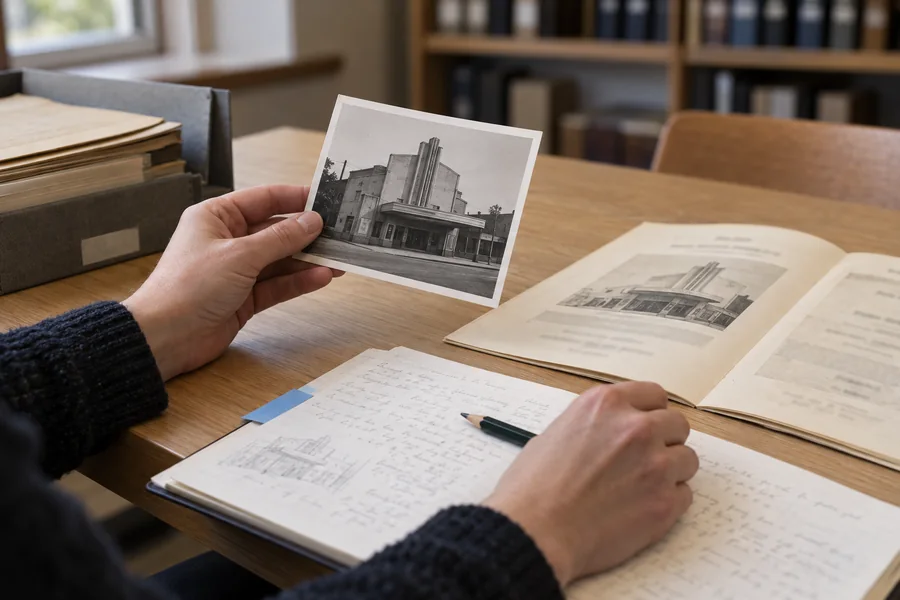
Give the source a location you can recover. Keep what it establishes separate from what still needs checking.
Original illustrative photograph, created for BookDraftLab.Resolve queries without erasing intentional variation
Review queries in context and record the resolution. A query should name the issue, its locations and the decision needed. Avoid a blunt instruction such as “fix all titles,” which hides whether the variation is wrong. Some inconsistencies are errors; others express viewpoint, social position, changing knowledge or a deliberate shift in form.
Sela may use “the lower bell” dismissively while the institution’s records call it “the Lower Bell.” If that difference is intentional, record who uses which form and why. If the draft simply wavers, choose one form and apply it to the relevant context. The sheet should explain exceptions clearly enough that they survive the next editing pass.
Be careful with global find-and-replace. Search results can include part of another word, dialogue where a variant belongs or an old name inside an intentionally preserved letter. Review occurrences where context matters. After a change, search again for the old form and inspect the new passages. A consistent replacement can still create an incorrect sentence or a new story contradiction.
Keep the sheet aligned with the current manuscript
Give the sheet a title and version that identify the manuscript it accompanies. When a revision changes a character’s role, location or time sequence, update the affected entries. If you share the manuscript for feedback or editing, include the relevant sheet and make clear which questions remain open. Do not present a provisional note as an established instruction.
Keep a brief change record for decisions with many consequences. If the bell can now be heard during a second tidal condition, note when and why that changed and which scenes were reviewed. You do not need an entry for every comma. Preserve the decisions that someone might reasonably question after a break from the project.
At the end of a pass, remove unused template headings and resolve or carry forward open queries deliberately. Test the sheet by answering a few actual questions: how is the role spelled, who has the key and when can Omi hear the bell? If the answers are difficult to find, improve retrieval. A shorter reliable record is more useful than an impressive document nobody trusts enough to consult.
A style entry that preserves the unresolved decision.
W04 · BELL / OMI
Current rule: Omi hears this bell at the lowest tide.
Established: S03, Sela’s lesson. Locator: the passage ending “until the water has gone.”

OPEN QUERY
S19 describes the tide rising when Omi hears it.
Possible explanations: the tide description is wrong; this is another bell; the ability changes.

STATUS
Author decision pending. Do not silently change the rule while editing S19. After deciding, inspect both scenes and update this entry with the retained version.
BOOKDRAFTLAB / ORIGINAL TEACHING MATERIAL
An original illustrative specimen. Adapt the method to your own material.
Build a starter sheet from one chapter
- Choose a chapter with recurring names, one timeline detail and at least one language choice. Create headings for decisions, word list, people and places, story facts and queries.
- Record ten useful entries from the actual text. Add a locator and mark each confirmed, provisional or query. Include brief examples where a label could be interpreted in more than one way.
- Find a repeated name or term elsewhere in the manuscript. Compare the occurrences and decide whether any difference is accidental, contextual or still unresolved.
- Resolve one query in the manuscript and the sheet. If the decision changes story information, list the other passages that require review before marking it complete.
- Close the document and use the sheet to answer three practical questions. Simplify any heading or entry that makes the answer harder to retrieve.
A compact, searchable style sheet tied to the current draft, with at least ten evidenced entries and a clearly separated query list. It should distinguish decisions you made from patterns you merely noticed.
Can you locate the evidence behind each entry, distinguish settled decisions from open queries, and use the sheet to resolve a real inconsistency in the current draft?
Make your own version here.
Common questions
Is a style sheet the same as a story bible?
They can overlap, but they serve different immediate needs. A story bible may contain extensive invention, research and future possibilities. A manuscript style sheet focuses on decisions and facts needed to edit the present text consistently. Link to larger background material instead of copying everything into the working sheet.
Should I make the sheet before or after drafting?
You can begin as soon as a decision is likely to recur, then add evidence while drafting and revising. Avoid filling a large template with rules the manuscript has not needed. A focused pass through existing pages can establish a dependable starting sheet without interrupting every new sentence.
Do I have to choose a formal style manual?
A chosen reference can help with unresolved language questions, but the sheet should still record the manuscript’s particular decisions and intentional exceptions. Use sources appropriate to your project and language variety. Do not change character voice merely to make every sentence resemble a reference example.
Sources and further reading
- Chartered Institute of Editing and Proofreading: Creating style sheets for fiction — further reading
These sources support further investigation. Check requirements at the relevant publisher or platform before a submission.