


Define a working reader through the experience your book offers: what they enjoy noticing, what they already understand, and which questions they should carry forward. Use that description to make decisions about explanation, pace, and emphasis in an actual passage. Then ask a willing reader what they understood and expected. Their response can test your invitation; an imagined reader profile alone cannot establish demand or prove that the pages work.
Useful when you cannot judge whether a passage needs more context, less explanation, or a different emphasis.“This book is for everyone” leaves the writer with a difficult editing job. You cannot tell whether a slow opening is inviting or frustrating, whether a technical explanation is useful or excessive, or whether a withheld answer creates curiosity or confusion. A working reader gives those decisions a context.
You do not have to invent a person’s age, income, favorite coffee or entire weekend. Begin with how someone reads: what they enjoy noticing, what they already understand and what kind of uncertainty they want to carry. Our fictional example is a quiet canal mystery in which retired lock keeper Ada investigates the disappearance of a route notebook before a heritage boat’s final public journey. We will build a reader brief that helps shape the pages without pretending to predict sales.
Describe the reading experience before the audience label
A category such as mystery or fantasy is useful shorthand, but it does not describe every experience within it. A reader might want a puzzle they can solve, sustained unease, intimate relationships or the pleasure of inhabiting a particular place. Several desires can coexist. Decide which one organizes your book and which ones support it.
For the canal mystery, the central experience is attentive discovery: readers enjoy seeing ordinary details acquire significance. The secondary pleasure is watching people renegotiate a shared past. The book can contain danger, but its main attraction is not prolonged pursuit or graphic violence. That choice will affect scene emphasis, not merely a later description of the book.
Write a short experience statement using verbs: “The reader notices routines, questions familiar explanations and revises their view of a small community.” Avoid empty praise such as gripping, beautiful or unforgettable. Those words cannot tell you whether Ada should inspect a lock gate, question a volunteer or spend a page remembering her first job.
Name the knowledge you can assume
Reader knowledge determines where explanation belongs. Someone familiar with canal travel may recognize a towpath immediately. Another reader may need a brief physical cue. You can welcome both by embedding essential orientation in action, then offering additional detail only when it changes what the scene means.
Assume that the canal reader is curious but not trained in waterway operations. Ada knows more than the reader; the narrator should not use that difference to hide the basic geography. When a locked gate prevents a boat from continuing, establish what the gate does and where the people stand. The mystery should concern the missing notebook, not whether the reader has understood the setting.
Make an explanation list with three columns: necessary now, useful later and optional texture. A lock’s immediate obstruction belongs in the first. The schedule for a heritage journey may become necessary before an alibi matters. The history of paint colors can wait unless a fresh patch identifies recent work. This list keeps expertise from becoming a barrier to entry.
The boat cannot reach the upper gate.
The cause of the missing notebook.
What will Ada do without the route notes?
Distinguish a promised uncertainty from missing information
Readers can enjoy uncertainty when they understand what question they are holding. They may happily wonder who removed the notebook while becoming frustrated if they cannot tell why Ada needs it. Give enough information to recognize the consequences, then choose what remains open. You are shaping curiosity rather than maximizing the quantity of concealed facts.
At the start, the reader can know that the notebook records informal arrangements absent from the official route plan. Without it, the final journey may stop at a gate nobody has agreed to open. They do not yet need to know which arrangement someone wants hidden. This creates a concrete problem before the deeper mystery expands.
List the first questions you want a reader to ask, in order. Then inspect the opening for accidental competitors. If readers ask “Why does Ada care?” before “Who took it?”, strengthen her responsibility for the journey. If they ask “Is this a supernatural story?”, check whether an unexplained atmospheric detail suggests a promise the manuscript will not fulfill.
Ada checked the pound. The next chamber was impossible, of course. Whoever had taken the book knew exactly what that meant.
Between the two locks, the water lay lower than Ada expected. The heritage boat could enter this stretch, but it could not reach the upper gate without help. She opened the route folder. The handwritten notebook was gone.
The revision gives a non-specialist reader a physical difficulty and a missing object. It withholds the cause rather than the basic situation. A reader can now form a useful question instead of guessing what the terminology means.

An invented doorway and letter suggest a question. Your passage must supply enough context for the reader to follow it.
Original editorial illustrationSet expectations for pace, intensity and attention
Pace is more specific than fast or slow. A reader may accept an unhurried conversation if the exchange changes an important relationship or exposes a contradiction. The same reader may lose interest in a short scene that repeats known information. Describe what will earn attention at the speed you want the book to move.
For Ada’s mystery, the brief might permit patient observation but require a discovery, changed suspicion or relational turn in each major scene. Intensity can come from a friend’s evasive answer rather than physical danger. Humor can arise from the practical inconvenience of organizing volunteers, while leaving the central emotional difficulty intact.
Write any content or tonal boundaries you intend to maintain. A quiet opening followed by an abrupt graphic scene may be deliberate, but it changes the experience you invited the reader into. Check whether the shift is prepared and necessary. Consistency does not mean every chapter feels identical; it means changes belong to the book’s developing terms.
Test the knowledge your reader actually needs.
Imagine a short guide for first-time community gardeners. The sentence “Harden off before transplanting” leaves an essential action inside two specialist terms. A reader profile becomes useful when it changes this passage.
An audience decision on the page
- Assumed knowledge
Readers recognize seed trays, but have not moved plants outdoors.
- Explain here
Gradually introduce seedlings to outdoor conditions.
- Defer or define
Local planting dates and the specific plants involved.
The revision should explain the action and its purpose, then identify what depends on the reader’s conditions. Do not replace one specialist phrase with a longer unexplained phrase. Read the paragraph as a sequence of decisions: what should a reader know before acting, and where must they seek more specific information? The resulting profile is a working hypothesis about comprehension, not evidence that a market exists.
What if knowledgeable readers find the explanation too slow?
Keep the essential instruction in the main route and move optional detail into a clearly labeled note. Test whether both groups can locate what they need. An imagined beginner and an imagined expert are starting assumptions; actual reader responses can reveal a different gap.
Use books you know as evidence, not templates
Think about several books whose reading experiences you can describe precisely. You do not need to claim that your manuscript equals them or borrow their plots. Record a narrow observation: one allows clues to remain visible during domestic conversation; another explains technical work through a novice’s question; a third gives a place emotional meaning through repeated visits.
Compare those choices with your own project. You might want the first book’s invitation to notice details while preferring a warmer tone and a less elaborate puzzle. Naming the difference matters. Without it, an admired book can become an unconscious instruction to copy its voice, chapter rhythm and cast.
Read a small passage again when your memory is vague. Separate what the page does from your overall affection for the book. “I loved it” is a true response but a weak drafting instruction. “The scene lets me understand the task before complicating the motive” suggests something you can test with Ada’s missing route notebook using entirely original material.
Build a brief that changes actual page decisions
Condense your observations into a working reader brief. Include the central pleasure, assumed knowledge, desired questions, tolerance for intensity and one thing the reader should be able to follow without effort. Keep the brief short enough to consult while revising. It is an editorial aid, not a fictional biography to maintain.
For this mystery: the reader enjoys fair observation and changing community relationships; needs no canal expertise; wants to investigate the notebook; accepts gentle pacing when each scene changes a suspicion; and should always understand Ada’s current task. This brief explains why a long historical lecture should move and why a quiet but consequential conversation can stay.
Use the brief on a difficult passage. If you cannot decide whether to keep a description, ask what the intended reader can notice or understand because of it. An orange mark on the gate might matter later. Five unrelated paint facts may simply delay the exchange. The brief does not dictate the answer, but it gives your judgment a concrete basis.
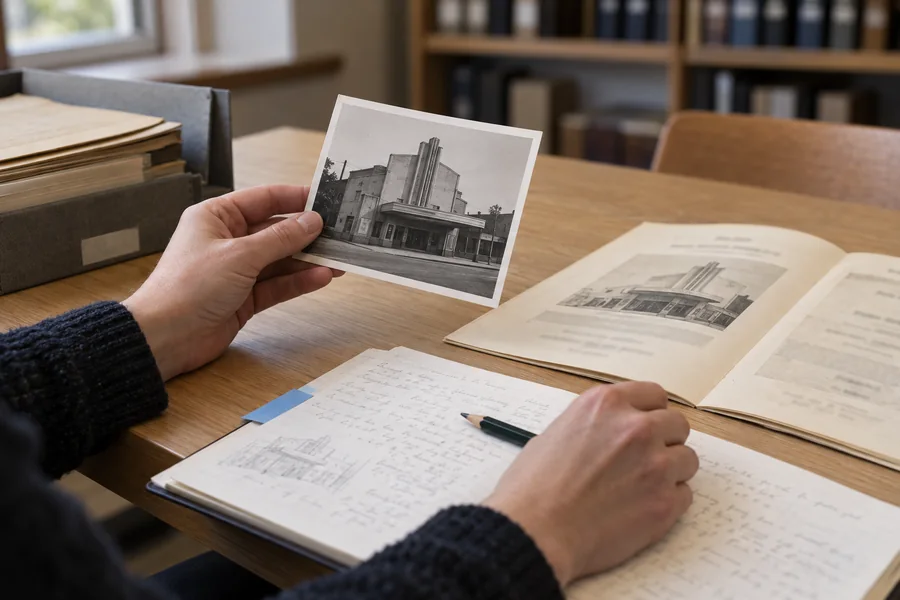
Give the source a location you can recover. Keep what it establishes separate from what still needs checking.
Original illustrative photograph, created for BookDraftLab.Ask test readers about the experience they had
A reader brief is a hypothesis. Test it with actual responses when you have suitable pages and willing readers. Ask about experience rather than whether they match your imaginary profile. Useful questions concern where curiosity began, what they expected next and which explanations they needed. Avoid telling them the intended answer before they read.
Give a short passage to someone comfortable with this kind of story and, if possible, someone unfamiliar with the technical setting. Ask both to describe Ada’s immediate problem. Their answers may reveal whether the missing notebook is clear. Ask where they felt invited to notice something. This can show whether the clue is available without announcing itself.
One reader’s preference is not a rule. A response that asks for more action may reflect a mismatch with the experience you intend. A response that cannot explain why the journey matters may expose a problem within that experience. Compare comments with your brief and the text before deciding whether to change the book or clarify whom it is inviting.
Adjust the invitation when the book changes
Your understanding of the reader can change during drafting. The canal project may become more concerned with Ada’s friendship than with solving the disappearance. If that is the stronger book, revise the brief and reconsider the opening. The pages should not continue advertising a puzzle-centered experience if the manuscript mainly develops a relationship.
Watch for overcorrection. Trying to satisfy every response can produce a book with a chase for one reader, a history lesson for another and a different ending for a third. Return to the experience you choose to offer. You can improve clarity and depth without absorbing incompatible expectations.
If the brief starts feeling restrictive, separate essential promises from provisional preferences. Essential: readers can understand the investigation and trust that clues have consequences. Provisional: most scenes occur near the canal. A later scene in a hospital waiting room could serve the same reader very well. The brief should protect the book’s purpose while leaving the writer room to find unexpected ways of fulfilling it.
Orient the reader, then give the puzzle room.
BOOKDRAFTLAB / ORIGINAL TEACHING MATERIALAda stopped the boat before its bow touched the upper gate. The water had dropped far enough to leave a pale band on the lock wall. Even with the gate open, she could not take the boat through.
She reached for the route folder. Someone had returned it to the shelf with the rings facing outward.
The printed map was there. The handwritten notebook was not.
Behind her, the passengers began unfolding their picnic chairs.
An original illustrative specimen. Adapt the method to your own material.
Create and test a one-page reader brief
- Describe the central reading pleasure using actions such as noticing, anticipating, learning or reconsidering. Add one supporting pleasure and one experience this particular book is not trying to provide.
- List what the reader already knows, what they need explained early and what can remain unfamiliar until later. Test one technical or invented term in a sentence of action.
- Write the first three questions you want the opening to raise. Read the opening without your notes and identify any more basic questions the text accidentally leaves unanswered.
- Choose a scene and explain three keep-or-change decisions using the brief. Look at exposition, a descriptive detail and the scene’s result.
- When a willing reader is available, ask them to describe the problem, their main curiosity and their next expectation. Compare that response with the brief before deciding what needs revision.
A concise reader brief and a marked scene showing how it changes your choices. Keep a dated note of what actual reading responses supported, challenged or left uncertain.
Can you point to three choices in a passage that follow from the reader brief, and identify one assumption that an actual reading response could challenge?
Make your own version here.
Common questions
Do I need a demographic target before I draft?
You can begin with reading preferences and assumed knowledge. Age category may matter to your project, but a detailed demographic portrait is rarely needed to decide whether an explanation works. Focus first on the experience the pages invite and the material a reader needs to follow it.
Can my book have more than one kind of reader?
Yes. Look for an experience those readers can share, then provide different layers around it. A canal enthusiast may enjoy accurate operational detail while another reader follows Ada’s relationships. Both need a clear immediate task and meaningful consequences; neither requires every detail to carry equal emphasis.
Should I change the book if a test reader dislikes the genre?
Consider their observations about clarity, but interpret their preferences in context. Someone who dislikes quiet mysteries can still identify a confusing location. Their wish for a different genre may be outside your chosen project. Make the distinction in your notes rather than accepting or rejecting their entire response.
Sources and further reading
These sources support further investigation. Check requirements at the relevant publisher or platform before a submission.