


How to Finish a First Draft
Write a completion agreement, map missing units, draft one essential unit, and preserve a separate revision log.
Read the guide
A routine is an arrangement that makes returning to the book easier. It does not have to happen every morning, include a particular drink, or produce the same number of words every day. Begin with the places in your actual week where a small task can fit. Then choose the kind of work those sessions can reasonably hold. A short evening session may suit a conversation more than a complicated research problem.
These guides treat drafting, research, planning, and revision as different forms of work. They also make room for restarting. A project left untouched for months needs a re-entry task before it needs an ambitious deadline. Reading a chapter and leaving a clear note can be a sensible first session. The aim is a repeatable way back to the manuscript, rather than a routine that succeeds only during an unusually quiet week.
Find the right lessonThe next step depends on whether you need an available session, a re-entry task or a clearer definition of progress.
Prepare a short session menu around actual available attention.
YOU’LL MAKE A flexible session planInventory what exists and test one live question.
YOU’LL MAKE A re-entry passageDefine essential completion work and park later repairs.
YOU’LL MAKE A draft finish lineReview what the session made possible. Research, reordering and a good return note can matter even when the word count does not rise. Adjust the next plan using those observations.
Tuesday: make up everything I missed last week.
Tuesday: open the last scene, read the return note and draft the exchange at the gate for twenty minutes.
A workable plan identifies an action and a boundary. It does not require the next session to repay the previous week.
Your turn: Choose one available window. Put the file, passage and next action in the plan before adding a word target.

Keep one specific task beside the notebook, ready for the next writing session.
Original editorial illustrationAn original illustrative specimen. Adapt the method to your own material.
Write a completion agreement, map missing units, draft one essential unit, and preserve a separate revision log.
Read the guideSave the existing draft, map its current state, and write one return passage with a bounded continuation plan.
Read the guideCreate a three-session log with date, intended task, result, and next action, then revise one upcoming task.
Read the guideDesign a two-week routine with a task menu, a modest weekly floor, a recovery rule, and session return notes.
Read the guide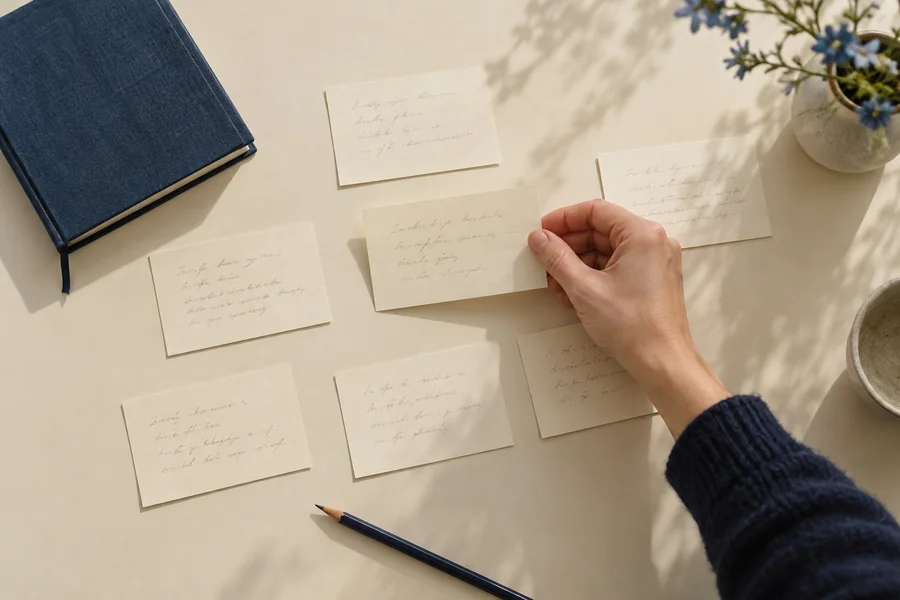
Treat the plan as a working arrangement. Let a passage test it before giving every chapter a permanent place.
Original illustrative photograph, created for BookDraftLab.Try a few sessions before building a long schedule. Record what you planned, what you did, and what made the beginning easy or difficult. Use that information to choose a conservative drafting estimate. The goal calculator can turn your assumptions into sessions and weeks, but it cannot know how much research the next chapter needs. Keep the numbers provisional and leave room for work that does not add to the word count.
A brief return note can carry more value than extending a tired session. Name the next scene, the source to consult, or the structural question you want to test. Put the relevant material where you will find it. If the week changes, reduce the task or move it without describing the missed session as a personal failure. A book can survive a different rhythm. A routine is useful when it helps you continue after an interruption as well as before one.
Write down what a smaller writing week would contain before you need it. It could be reading the last two pages, leaving a return note, and making one short drafting attempt. This does not replace the ordinary plan forever. It gives the project a recognizable point of contact when work, care, travel, or rest takes priority. Choose a minimum that supports your circumstances rather than turning a reduced plan into another impossible standard.
When time becomes available again, look at what actually remains unfinished. You may need to reread a sequence before resuming it, or update research that has changed. Add that return work to the plan. Do not hide it by pretending every available hour will immediately produce new pages. A realistic routine includes the cost of finding your place. Over several weeks, observe which arrangements help you begin with less confusion, and keep those.
The useful pattern is the one you can return to, not the one that looks most impressive in a schedule.