


Writing goal calculator
A working estimate for draft words. Room to change your mind.

Your estimate will appear here.
Start with a conservative pace.
Use an observed pace
Start with words you actually produce in ordinary sessions.
Allow room
Research and revision are separate from a new-word estimate.
Revisit the plan
Update the assumptions when the work or available time changes.
Follow the rounding through one estimate.
- Starting assumptions
- Target: 36,000 words. Already drafted: 6,000. Observed pace: 600 new words per session, four sessions per week.
- Drafting work
- 30,000 words remain. At 600 per session, that is 50 sessions. Dividing by four gives 12.5 weeks, rounded up to 13.
- Extra room
- Adding 20% to the rounded drafting estimate gives 15.6 weeks, rounded up to 16.
- What remains separate
- Research, feedback and revision are not measured by this new-word estimate. Plan their time separately.
An original illustrative specimen. Adapt the method to your own material.Return to the workspace ↑
Read the estimate as a set of assumptions.
- Illustrative inputs
- 30,000 words left; 500 new words per session; 3 sessions per week.
- Drafting result
- 60 sessions; 20 weeks before any interruption allowance.
With a 20% allowance, the working estimate becomes 24 weeks. This calculation covers new drafting under the supplied assumptions. It does not add time for interviews, research, restructuring or proofing. If an ordinary session produces fewer new words than expected, change that input and compare the result instead of treating the first estimate as a deadline.
What if I am revising rather than adding words?
Use a task or section plan outside this calculator. A revision pass can remove words while improving the manuscript. The new-word formula cannot estimate the work of diagnosing and testing a structural change.
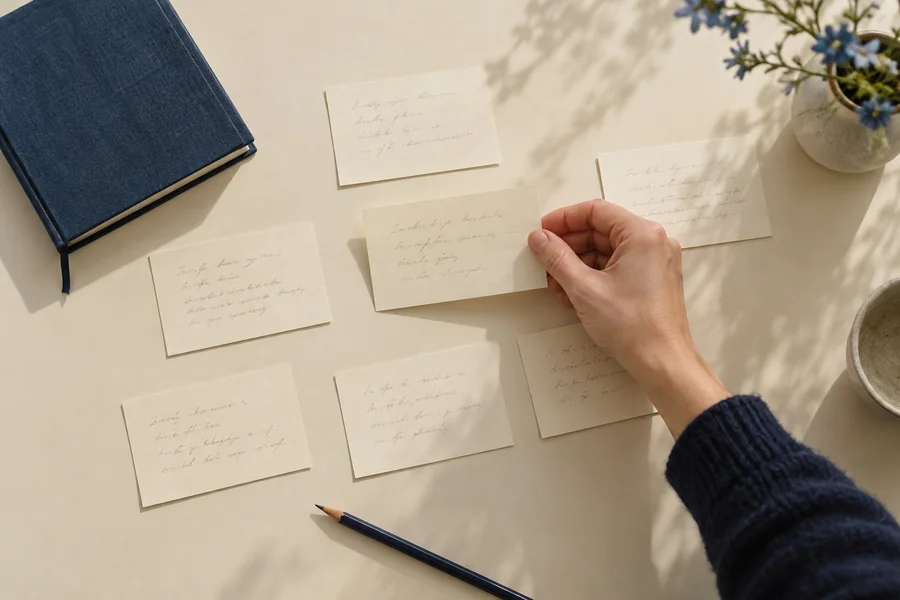
Treat the plan as a working arrangement. Let a passage test it before giving every chapter a permanent place.
Original illustrative photograph, created for BookDraftLab.Use the tool with a clear task.
Make a small plan that fits an ordinary week. Open a note below for an example or a closer explanation.
Before you begin
A word count estimate can help you see the scale of a draft. It cannot tell you how long the whole book will take. Enter a provisional target, the words already written, the sessions you can usually make in a week, and a conservative estimate of new words per session. The result rounds up to whole sessions and weeks so a partial session does not quietly disappear from the plan.
Use an observed pace if you have one. If you do not, try a few ordinary sessions before treating the estimate as a schedule. Writing time changes with the material. A dialogue draft, a researched explanation, and a structural revision can produce very different word counts. The calculator measures only the new-word part of the job. Plan research, rest, feedback, and revision separately.
Try a small example before committing.
Suppose a project has 20,000 draft words and a working target of 80,000. At 700 new words per session, the remaining 60,000 words need 86 sessions after rounding. Three sessions a week produce an estimate of 29 weeks. That arithmetic is useful for comparing assumptions. It does not predict interruptions or the amount you will later cut. Choose a plan you can revise rather than treating the number as a promise about your future output.
Recalculate after the book changes.
A target may shrink when you narrow a nonfiction subject or grow when a novel needs another viewpoint. Your available sessions may change, too. Update the assumptions without presenting a missed session as a debt. If you are revising existing material, track a task such as chapters reviewed or structural questions answered instead. Adding words simply to satisfy the calculator will not make a manuscript more useful or a story more complete.
Change one assumption at a time.
If the estimate seems unworkable, compare alternatives deliberately. Keep the draft target the same while reducing the sessions, or keep the weekly rhythm while choosing a smaller project scope. Notice which change reflects a real decision you can make. Increasing the words-per-session field because the result looks too slow does not create more writing time. Likewise, a larger target is not automatically a more substantial book.
Use the calculation to understand the consequences of a plan. After several ordinary weeks, compare the assumption with your actual process and revise it. The estimate should support practical choices about the project, not supply a numerical judgment about your commitment or the value of a session.
Questions about this tool.
What is the right target for my book?
There is no single target for every audience, genre, or destination. Use a provisional figure for planning, research relevant expectations, and revise it when the manuscript’s scope becomes clearer.
Does the estimate include editing?
No. It estimates new draft words only. Editing, research, fact-checking, design, and publication are different tasks. A finished first draft is one stage of a book.
Read the matching lesson.
Use a matching guide to examine the choices through a worked example, then return here to keep your own result.