


How to Choose a Narrator for Your Book
Draft three versions of one moment, compare their access and attitude, and write a temporary narration agreement.
Read the guide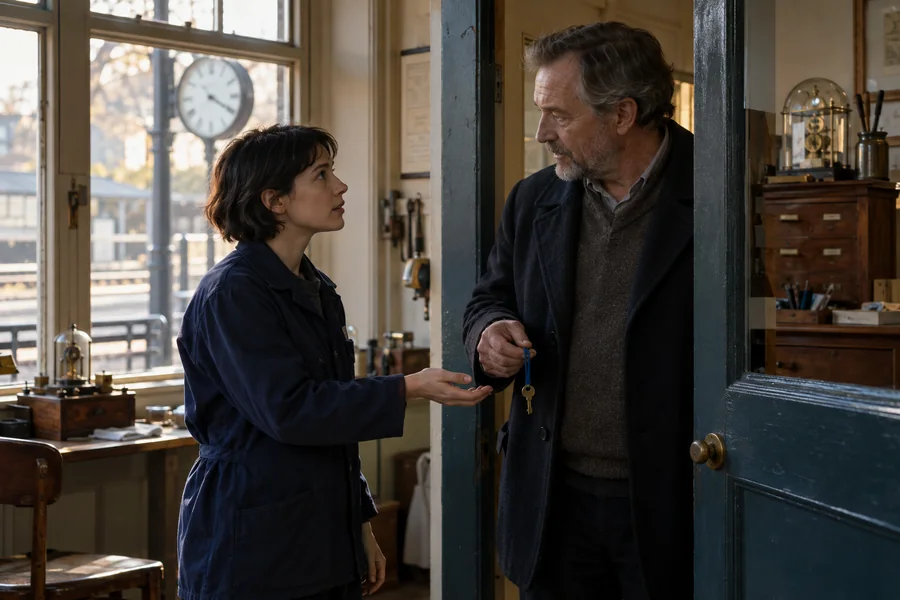
A fiction technique becomes useful when it helps you make a decision on the page. Point of view determines which experience the reader can enter. A scene gives a want, an obstacle, or a discovery enough space to change something. An opening establishes a place to begin asking questions. These are related jobs, but one universal formula will not make every story work.
The guides in this collection use small tests instead of asking you to redesign a whole novel at once. Write one moment through a different narrator. Describe what changes between a character entering and leaving a room. Compare the information offered by two possible opening paragraphs. Keep both versions until you understand what each one does. The result of a test may be a choice to preserve the original.
Find the right lessonScene, narrator and opening decisions affect one another, but you can test one at a time with a short controlled passage.
Stage a request, a meaningful obstacle and its consequence.
YOU’LL MAKE A scene with a changed situationKeep one event and compare two narrators’ access to it.
YOU’LL MAKE A viewpoint comparisonEstablish a person and situation before testing the opening question.
YOU’LL MAKE An opening the reader can followKeep your alternate versions. Compare what each invites the reader to know, anticipate or question. The more dramatic version is not automatically the one that suits the book.
The caretaker tells the visitor to come back later.
The caretaker will return the visitor’s key only after she explains whose name is missing from the register.
The condition creates an exchange. The visitor’s answer can affect both the practical task and a relationship.
Your turn: Write the same event from each person’s viewpoint. Compare which uncertainty gives the passage its movement.
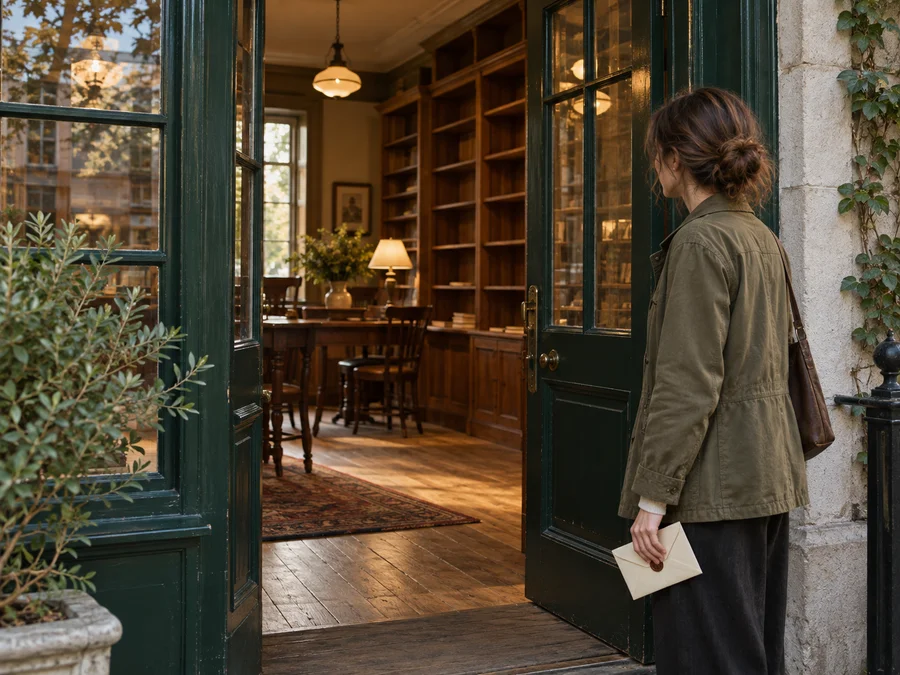
An invented scene: a letter in hand, an open doorway and a decision still to make.
Original editorial illustrationAn original illustrative specimen. Adapt the method to your own material.
Draft three versions of one moment, compare their access and attitude, and write a temporary narration agreement.
Read the guideDraft three entrances to one event, complete the strongest encounter, and state the reading experience its opening promises.
Read the guideWrite a scene card, draft the attempt through a consequence, and add a before-and-after statement with three revision notes.
Read the guide
Locate the passage, separate the reaction from a diagnosis and choose one change worth testing.
Original illustrative photograph, created for BookDraftLab.A quiet scene can change a relationship, reveal a misunderstanding, or make a later choice inevitable. The change need not be an explosion. Ask what somebody can no longer assume afterward. In the invented reading-room example, a person who hides a letter has moved from completing an ordinary contract to maintaining an omission. That consequence can sustain another scene even when the immediate action is small. Choose the amount of detail that lets the reader experience the change.
Observe how a book you own or can legally access handles a problem similar to yours. Summarize the technique in your own words rather than lifting a passage into your manuscript. Notice how the writer introduces a setting, changes narrative distance, or delays an answer. Then test a different situation from your own project. Reading for craft is most helpful when it produces a question you can use, not a command to make your book sound like somebody else’s.
Choose one small moment and change one aspect of how it is told. Keep the event recognizable while trying another narrator, a later entrance, or a different amount of background. Read both versions and name the tradeoff. A closer viewpoint may create immediacy while limiting explanation. A later opening may create energy while removing context a reader needs. The comparison is more useful when you can describe both the gain and the cost.
Do not automatically apply the preferred local version to every chapter. A narrator who works well for a discovery may not be the right carrier for the whole book. A compressed transition may need more space when a relationship changes there. Test the choice beside the surrounding pages. Fiction techniques are ways of directing an experience, not switches that are universally better in one position.
Keep a note of the effect you want, and let the actual scene determine how much of the technique it needs.