


Reverse outline builder
Describe what each chapter does before deciding what to change.
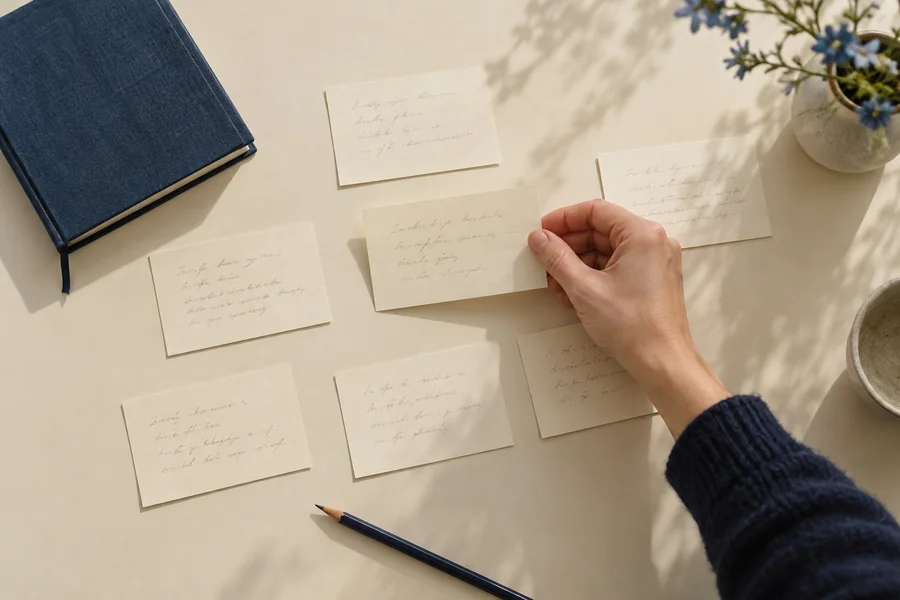
Keep the useful details.
Note removed.
Backups, restore & saved data
Export a JSON backup to restore these notes in another browser. An import is checked and previewed before anything is saved.
Clear the saved notes for this tool from this browser? Export anything you want to keep first.
Describe the section
Record its actual action or explanation.
Name the change
What is different for the reader by the end?
Compare the rows
Look for repeated work and missing steps before editing.
A row should record what the draft actually does.
- Chapter or scene
- Scene 9 — the replacement driver.
- What happens
- A passenger asks who authorized the stop before the bridge. The driver gives the unofficial explanation rather than claiming it is on the timetable.
- What changes
- The passenger now knows the driver is making the exception herself. A private accommodation has become something she may have to defend.
- Question to inspect
- Does the earlier scene establish why the exception matters? Keep the answer separate from a proposed new scene.
An original illustrative specimen. Adapt the method to your own material.Return to the workspace ↑
Keep the map factual before rearranging it.
- Vague row
- Chapter 4: more about the missing parcel.
- Comparable row
- The porter identifies the seal; Bea decides to visit the old address.
Use a consistent unit: a scene, a section or a short chapter. Record what actually occurs before adding proposed repairs. Moving a card changes the working map, not the manuscript file. After testing an order in prose, update the cards to describe the version that now exists and export the map you want to retain.
What if my chapter contains two turning points?
Create two located rows so you can inspect their separate functions. Keep the chapter reference in both. You can combine the notes later if a larger view becomes more useful.
Observe the difficulty, choose the scale of the repair and keep an original against which to test the result.
Original illustrative photograph, created for BookDraftLab.Use the tool with a clear task.
See what the draft does before deciding what to change. Open a note below for an example or a closer explanation.
Before you begin
A reverse outline is a map made after drafting. It records the work each chapter or scene actually performs, including places where that work differs from your original plan. Read a manageable portion and summarize it without trying to fix everything at once. The form asks for an event or explanation, a change, and a question for later inspection. Add entries in the order you read the manuscript.
For fiction, the change may concern knowledge, intention, a relationship, or a practical situation. For nonfiction, describe what a reader can understand or attempt after the chapter. If you cannot identify a change, record that uncertainty rather than inventing a stronger function than the pages currently have. The map becomes useful precisely because it describes the draft honestly.
Keep the summary factual enough to compare.
“A moving chapter about loyalty” names an intended effect. “The finder returns the key while keeping the letter” gives you something to inspect beside the surrounding scenes. For nonfiction, “introduces the three criteria for choosing a venue” is more useful than “important planning advice.” A concrete summary can reveal repetition, missing preparation, or a claim introduced too late. Keep your opinion about the repair in the final field rather than mixing it into the description.
Look across entries before rewriting.
Export the notes and read them as a sequence. Ask whether two chapters do the same work, whether a decision arrives without preparation, or whether an argument depends on evidence that appears much later. Choose one pattern to test in a separate manuscript version. This form records chapter notes; it does not move or edit the manuscript for you. Keep the chapter labels consistent enough that you can return to the relevant passage.
Notice a deliberate repetition before removing it.
Two chapters can revisit a subject while doing different work. The first might establish a public version of an event; the second might expose what a character deliberately omitted. Record that difference in the change field. If both entries still describe the same information and consequence, you have a pattern worth inspecting. A reverse outline should make the distinction visible rather than assume all repetition is redundant.
Add enough detail to locate the relevant moment in the manuscript. If a scene contains several changes, summarize the central one and put secondary questions in the final field. You can expand the note in your exported working document without making the browser form a complete copy of the book.
Questions about this tool.
Can I use this before a draft exists?
You can record a proposed outline, but label it as a plan. A reverse outline becomes a different kind of evidence when it describes pages that have actually been written.
Will it tell me what to cut?
No automatic judgment is made. The tool organizes your observations so you can compare functions and make editorial decisions. A repeated idea may be deliberate; examine its effect before removing it.
Read the matching lesson.
Use a matching guide to examine the choices through a worked example, then return here to keep your own result.